Growth Plate Injuries
Growing bones can be injured in different ways. A fall or blow may fracture the growth plate near the end of a bone; repeated loading can also injure it. Pain can also develop at growth centres where tendons attach, as in Osgood-Schlatter or Sever's disease. These problems need different assessment and activity advice.
Key points
- What usually helps
- Cutting back the most aggravating activities while keeping up the ones that do not hurt.
- What you can do now
- Get a new injury or limp checked first. Cut back the most aggravating activities.
- When to see a doctor first
- Some signs need emergency care. Check the list before you start treatment.
Symptoms
Does this sound like you?
- Overuse pattern: pain at a bony bump where a tendon attaches, such as just below the kneecap or at the back of the heel, that builds with running and jumping
- Acute pattern: pain, swelling, and tenderness over the end of a bone after a fall, tackle, or twist
- Pain that settles with rest in overuse cases, often during or after a growth spurt
Often alongside it
- A sore, sometimes enlarged, bony bump that is tender to press
- Tight calf, thigh, or hip muscles during a growth spurt
- Limping after sport, or difficulty taking weight after an injury
Pain around a growing bone can come from overuse or from an acute fracture, and those need different care. A new injury, a limp, or difficulty bearing weight should be checked by a doctor before exercise begins. Go to emergency now for sudden hip, thigh or knee pain, inability to bear weight, a leg that looks deformed, or a fever with feeling unwell. If a slipped growth plate at the hip (SCFE) is suspected, keep the child off the leg and seek emergency assessment today.Book an assessment for growth plate injuries
When to see a doctor first
Go to emergency
A limping child or teenager with sudden hip, thigh or knee pain, who cannot put weight on the leg, whose leg looks deformed, or who has a fever and feels unwell
Go to emergency now
A suspected slipped growth plate at the hip (SCFE)
Do not let the child walk on the leg, and seek emergency assessment today. In a teenager this can show up as a limp with hip, groin, thigh or knee pain, sometimes with the foot turned outward, even when they can still walk
Unable to bear weight, a visible deformity, or marked swelling over a growth plate after a fall or a blow
Go to emergency or urgent care now for an X-ray to rule out a growth plate fracture
Get seen today
Pain at night or at rest, fever, or a hot, swollen joint
Same-day medical assessment to rule out infection or another bone problem
Check with your doctor
A child or teenager with a new limp that has no clear explanation
Get a prompt medical assessment before starting exercises. A hip problem can be felt only in the groin, thigh or knee
Pain on one side only that keeps getting worse despite reduced activity, or a lump on the bone
See your family doctor before physiotherapy continues, for imaging
Elbow or shoulder pain in a young thrower that does not settle with rest from throwing
See your family doctor for an X-ray before throwing again
Treatment
How it is treated
A typical rehabilitation progression
Three phases, from settling symptoms to returning to full activity.
Recovery from growth plate injuries is usually staged: calm the symptoms first, then rebuild the strength and capacity of the area, then return to your full activities. The phases below show how that can progress.
Phase 1Symptom Control and Load Reduction
Bring symptoms under control by doing less of the activities that aggravate it most, rather than stopping sport outright. Confirm that a higher-risk problem has been ruled out. Keep the child involved and motivated.
Example exercises
- Rest from the most aggravating activities while staying active in other ways (relative rest), such as repeated jumping for Osgood-Schlatter or running on hard surfaces for Sever's
- Keeping up training that does not aggravate it, such as skill work, swimming or cycling, to maintain fitness and enjoyment
- Gentle mobility work for the calves, the back of the thighs (hamstrings) and the front of the thighs (quadriceps), depending on the area affected
- Footwear review, with heel cups or cushioning where appropriate for Sever's
- Education for the child and parent on the nature of the condition and expected timelines
Possible progression milestones
Daily activity and school tolerated without pain, pain with sport reduced to a manageable level, no night pain or pain at rest, and child and family clear on what is happening.
Phase 2Progressive Strengthening and Graduated Loading
Rebuild strength, and the load the affected area can take, while keeping overall training at a level the can tolerate. Strengthening exercises are central, and progress is slower than in adult rehab.
Example exercises
- Calf and front thigh strengthening for growth-area irritation in the leg (), starting with body weight and adding load as tolerated
- Shoulder blade and exercises for throwing-related arm problems, with attention to how much throwing the child does overall
- Single-leg balance and hops, on soft surfaces before firm ones, and on two legs before one
- Sport-specific skill work in small doses, alongside other types of training (cross-training)
- Simple tracking, such as a training diary or a traffic-light pain scale, so progress is guided by how the body responds rather than guesswork
Possible progression milestones
Handling increasing single-leg exercises without a flare-up, running and jumping at moderate intensity without pain the next day, and strength differences between the sides noticeably reduced.
Phase 3Return to Full Sport and Long-Term Load Management
Bring the child back to full training and competition with a sustainable load pattern that respects the growing skeleton. This is where training culture and conversations with coaches and parents matter as much as the exercises themselves.
Example exercises
- Graded return to full training, following the principles in DiFiori and colleagues' 2014 position statement on youth overuse injuries
- Weekly training volume limited to sensible levels relative to age, with scheduled rest days and periods of reduced load
- Ongoing strength and mobility work built into a short home program, typically two to three sessions per week
- Regular reviews, particularly around growth spurts, when what the tissues can handle can change quickly
- Open conversation about focusing on one sport early (early specialisation), playing several sports, and preserving long-term enjoyment of sport
Possible progression milestones
Full participation in sport without pain that limits performance, no recurrence on careful load progression, and a training structure the family can maintain independently.
What you can do now
- Get a new injury or limp checked first. A new injury, a limp or difficulty taking weight should be checked by a doctor before exercise begins, because overuse irritation and a growth plate fracture need different care.Sudden hip, thigh or knee pain, not being able to take weight, a leg that looks deformed, or a fever with feeling unwell means go to emergency now. If a slipped growth plate at the hip (SCFE) is suspected, keep your child off the leg and seek emergency assessment today.
- Cut back the most aggravating activities. For overuse irritation such as Osgood-Schlatter or Sever's, do less of the activities that flare it most, such as repeated jumping or running on hard surfaces, rather than stopping sport completely. Complete rest is kept for fractures from an injury, or for when pain is changing how your child walks and moves.Elbow or shoulder pain in a young thrower that does not settle with rest from throwing needs a visit to your family doctor for an X-ray before throwing again.
- Keep up activities that do not hurt. Skill work, swimming or cycling can keep up your child's fitness and enjoyment of sport while the sore area settles.
- Plan rest days and track training. As broad principles, allow at least one to two rest days a week, and as a rough guide keep weekly training hours from exceeding your child's age in years. A training diary or traffic-light pain scale helps you see how the body responds, so increases are guided by that rather than guesswork.Pain at night or at rest, a fever, or a hot, swollen joint needs a same-day medical assessment.
Similar conditions
Conditions that can feel similar
- Salter-Harris Physeal Fracture (Types I to V)
- A sudden injury with pain at one spot directly over a growth plate, often after a clear event such as a fall or tackle. Salter and Harris's 1963 classification describes five patterns, from slippage through the growth plate (Type I) to crush injury (Type V). Any suspected Salter-Harris fracture needs imaging and orthopaedic review, because types III, IV and V carry a higher risk of affecting how the bone grows (growth disturbance).
- Osgood-Schlatter Disease (Tibial Tubercle Apophysitis)
- In growing athletes, the kneecap tendon pulls on and irritates a growth area at the bony bump below the kneecap (the tibial tubercle), causing pain, swelling and a prominent, tender bump. It is worse with jumping, running and kneeling. It typically settles on its own once growth is complete, and is managed by adjusting load rather than complete rest.
- Sever's Disease (Calcaneal Apophysitis)
- Heel pain in growing children, often 8 to 14 years old, worse with running and jumping, with tenderness when the heel bone is squeezed from both sides. It commonly affects both heels. Cushioned shoes, heel lifts, calf flexibility work and adjusting load usually do the heavy lifting.
- Sinding-Larsen-Johansson Syndrome
- The kneecap tendon pulls on and irritates the growth area at the bottom tip of the kneecap (the inferior pole of the patella); it is the childhood counterpart of patellar tendinopathy. Pain sits in one spot at the front of the knee and is worse with jumping and running, and the bottom tip of the kneecap is tender. It settles with load management as growth finishes.
- Little League Shoulder / Elbow (Proximal Humeral Growth Plate Stress Injury and Medial Epicondyle Apophysitis)
- Overuse injuries in young throwing athletes. Little League shoulder is a stress injury to the growth plate at the top of the upper arm bone (the proximal humeral physis), rather than a tendon pulling on a bony bump, and is managed as a growth plate injury with rest from throwing and medical review. Little League elbow involves the growth centre on the inner elbow. Often linked to high pitch counts or year-round throwing. DiFiori and colleagues' 2014 position statement on youth overuse injuries highlights load monitoring as central to prevention and recovery.
- Slipped Capital Femoral Epiphysis (SCFE)
- A teenager, often with a higher BMI, with hip or groin pain, or knee pain referred from the hip, and a limp. The leg rests turned outward, it turns inward less than normal (loss of internal rotation), and it rolls outward on its own when the hip is bent up (obligatory external rotation). A suspected SCFE needs the child kept off the leg (no weight-bearing) and urgent emergency or orthopaedic assessment, not physiotherapy as a first step.
Questions
What patients ask me most
What is a growth plate and why is it vulnerable?
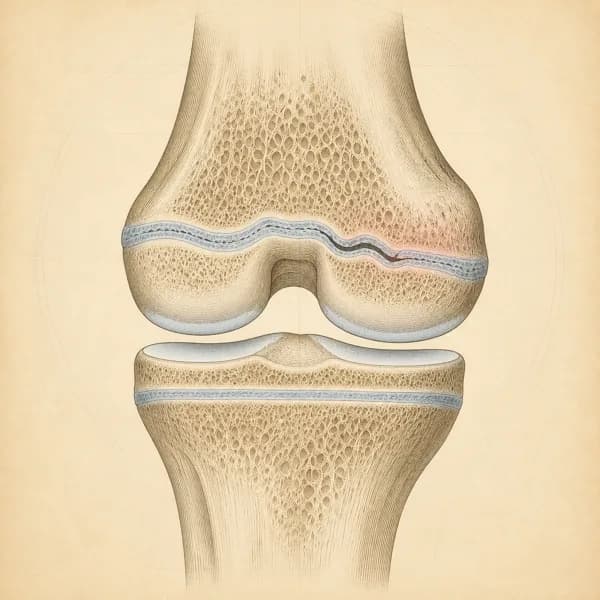
A growth plate, or physis, is a zone of cartilage near the ends of long bones where lengthwise growth happens through childhood and adolescence. Because cartilage is mechanically weaker than the surrounding bone, the physis can be injured by forces that an adult bone would absorb without issue. That is why Salter-Harris fractures and apophysitis (irritation where a tendon pulls on a growth area) are problems of childhood and the teen years rather than adulthood.
Is Osgood-Schlatter serious?
It is usually benign and self-limiting, but it is real pain and it can sideline a young athlete from sport they care about. The tibial tubercle stays tender and prominent because the patellar tendon pulls repeatedly on a growth area that has not yet fused into solid bone (an immature apophysis). Management is mostly load modification, relative rest from the activities that aggravate it most, calf and quadriceps mobility, and reassurance. Symptoms usually settle once that growth area fuses, in the mid to late teens.
Does my child need to stop sport completely?
Rarely. For most apophysitis patterns, such as Sever's, Osgood-Schlatter, and Sinding-Larsen-Johansson, complete rest is not the goal. DiFiori and colleagues' 2014 position statement on youth overuse injuries supports modifying training load, reducing volume of the most aggravating tasks, and keeping the child engaged in sport where possible. Complete rest is reserved for acute fractures or when pain is changing how the child walks and moves.
How are Salter-Harris fractures different from apophysitis?
Salter-Harris injuries are acute fractures through or near the growth plate, usually after a specific traumatic event. They are classified Type I through V based on where the fracture line runs, and types III, IV, and V have higher risk of growth disturbance. Apophysitis is a gradual overuse injury where a tendon pulls on a growth area at a bony bump, such as below the kneecap (the tibial tubercle) or at the back of the heel (the calcaneus), without a fracture. Management and urgency differ substantially.
Will my child end up with uneven legs or a deformity?
The honest answer is that most growth plate injuries in children heal without any long-term effect on growth, but a minority do slow or stop growth there, partly or fully (growth arrest), especially with Salter-Harris types III, IV, and V. That is why sudden injuries that may involve the growth plate are followed up by the orthopaedic team over months, not just weeks. Apophysitis conditions do not typically cause long-term deformity.
What is an appropriate training load for a young athlete?
Broad principles from the 2014 position statement by DiFiori and colleagues include at least one to two rest days per week, avoiding year-round single-sport specialisation before mid-adolescence, keeping training hours per week from exceeding the child's age as a rough guide, and respecting pain signals rather than pushing through. Coaches, parents, and the child all have a role in the conversation, not just the physio.
Do I need an X-ray?
If the injury is acute with suspected fracture, yes, imaging is part of the initial workup. For apophysitis with a typical picture, such as a 12-year-old gymnast with pain in both heels and pain when the heels are squeezed from both sides, imaging often adds little. When the story does not match the exam, when symptoms are not settling as expected, or when a higher-risk pattern is suspected, imaging can change the plan, and then I flag it to your family doctor or specialist and refer you.
When can my child return to full sport?
For apophysitis conditions, return to sport is graded rather than binary. Once pain is tolerable with daily activity and single-leg loading, a progressive return to running, then jumping, then sport-specific drills, then full training, is the usual path. For Salter-Harris fractures, return is guided by the orthopaedic team and depends on the fracture type, healing, and any activity restrictions they set.
The science
The Science of Growth Plate Injuries
During growth, the ends of long bones contain a layer of cartilage called the , where new bone is laid down. That cartilage is mechanically weaker than the surrounding bone and, importantly, weaker than the nearby ligaments and tendons. The consequence is that a force which would sprain a ligament in an adult can instead injure the growth plate in a child or adolescent.
Two patterns account for most presentations. The first is an acute injury where a single significant force fractures through or across the growth plate. The second, and more common in clinic, is traction : a tendon repeatedly pulls on the growing bone at its attachment, irritating the area over weeks or months. Sever's disease at the heel and Osgood-Schlatter at the knee are the familiar examples.
Because the growth plate contributes to the future length and shape of the bone, acute injuries in this area warrant prompt medical assessment and imaging. Traction apophysitis, by contrast, is a load management problem and is generally self-limiting once growth completes, though it can be genuinely limiting while it is active.
Contributing factors
Growth itself is the underlying driver. During a growth spurt bone lengthens before the surrounding muscle and tendon adapt, which transiently reduces flexibility and increases the pull on the attachment site. This is why symptoms so often coincide with a period of rapid growth.
Training load is the modifiable factor. High volumes of running and jumping, year-round participation in a single sport, and a sudden increase at the start of a season all raise the demand at the attachment. Playing through pain tends to prolong the episode rather than build tolerance.
Management in a growing athlete is therefore less about rest and more about calibration: reducing the aggravating load enough to settle symptoms, maintaining strength and flexibility around the area, and rebuilding volume at a rate the tissue can keep pace with. Complete withdrawal from sport is rarely necessary and is rarely the best answer.
Research
What the studies show
Overuse injuries in young athletes are linked to training load and early single-sport specialisation
A position statement from the American Medical Society for Sports Medicine (DiFiori and colleagues, Clinical Journal of Sport Medicine, 2014) reviews overuse injuries and burnout in youth sport, including growth plate injuries, and recommends monitoring training volume, allowing rest, and avoiding early single-sport specialisation.
Supports managing apophysitis through training load, rest days and multi-sport participation rather than complete rest.
DiFiori JP, Benjamin HJ, Brenner JS, et al. Overuse injuries and burnout in youth sports: a position statement from the American Medical Society for Sports Medicine. Clin J Sport Med. 2014;24(1):3-20. PMID: 24366013.
Evidence for specific non-surgical treatments of heel and knee growth plate irritation is limited
A Cochrane review by Williams and colleagues (2026) of 10 randomised trials in 654 children with Sever's disease or Osgood-Schlatter disease rated the evidence mostly low to very low certainty, and found that shoe inserts (foot orthoses) and heel lifts likely made little to no difference compared with each other.
Load management and simple measures remain the basis of care, with honest expectations about what any single treatment adds.
Williams CM, Krommes K, Paterson KL, et al. Non-surgical treatment for lower limb apophyseal injuries. Cochrane Database Syst Rev. 2026;7(7):CD015156. PMID: 42454655.
Related Conditions
Conditions I commonly see alongside, or confused with, this one.
Patellar Tendinopathy (Jumper's Knee)
Osgood-Schlatter is the growth plate version of the load that causes patellar tendinopathy in adults
Ankle Sprains
In children a twisted ankle often injures the growth plate rather than the ligament
Stress Fractures
Both are bone overload injuries that need load management rather than stretching
Shin Splints
Both are common overuse problems in growing athletes during training spikes
Plantar Fasciitis & Heel Spurs
Getting back to it
Physiotherapy for growth plate injuries, built around the activity you want back.