Stress Fractures
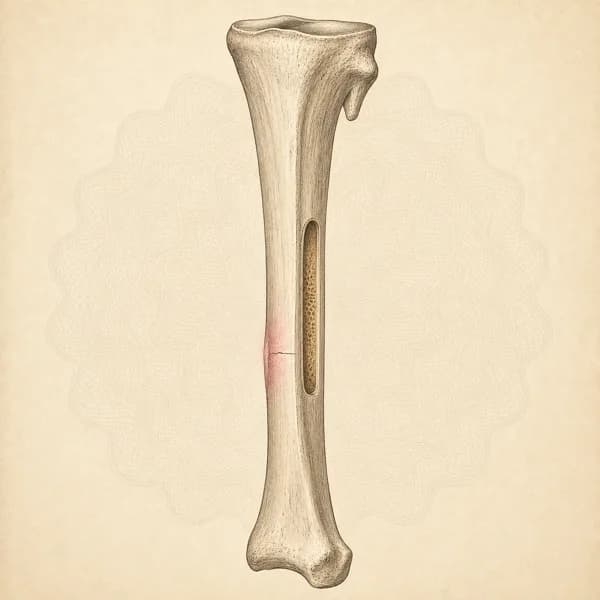
A stress fracture is a small crack in a bone when repeated loading outpaces its ability to repair. Pain often builds gradually and is felt at one spot. Bone stress can also occur before a crack appears. The affected bone and the extent of the injury both influence protection and recovery.
Key points
- What usually helps
- Time away from impact, with a protection plan matched to the bone involved, and a look at the causes.
- What you can do now
- Stop running and get it checked. Follow the protection plan for your site.
- When to see a doctor first
- Some signs need emergency care. Check the list before you start treatment.
Symptoms
Does this sound like you?
- Pain at one spot on a bone, often small enough to cover with a fingertip
- Pain that starts during or after activity such as running, then over time comes on earlier or lasts longer afterwards
- Tenderness when that spot on the bone is pressed
- As it progresses, pain with ordinary walking or at rest
Often alongside it
- Mild swelling over the sore spot
- Pain at night in more advanced cases
- A recent increase in training, a new activity, or a change in surface or footwear
- With hip or groin pain in a runner, a limp or pain when putting weight on the leg
Usually builds over days to weeks after a change in training load. Where it hurts matters as much as how it hurts: pain in the groin, the front of the shin, the top of the midfoot, or near the base of the fifth toe bone needs earlier medical assessment, because those sites are more likely to heal poorly.Book an assessment for stress fractures
When to see a doctor first
Go to emergency
Sudden severe pain, a crack or pop, or being unable to bear weight on a bone that was already sore
Go to emergency or urgent care now for an X-ray
Get seen today
Groin, hip, or front-of-thigh pain in a runner or walker, especially pain when putting weight on the leg, at night, or a new limp
Stop running, use crutches if walking hurts, and get same-day medical assessment; a stress fracture of the femoral neck (top of the thigh bone) can become a complete break
Check with your doctor
Pain at one spot on the front of the shin, the top of the midfoot (navicular), or the outer edge of the foot near the base of the fifth toe bone
See your family doctor promptly and before any loading; these high-risk sites heal poorly and need imaging and medical review
Pain at one spot on a bone that is there at rest or at night
Stop the activity and see your family doctor before starting physiotherapy
Missed or irregular periods, recent weight loss, or a second stress fracture
See your family doctor to check bone health and energy availability (REDs) alongside rehabilitation
Treatment
How it is treated
A typical rehabilitation progression
Three phases, from settling symptoms to returning to full activity.
Recovery from stress fractures is usually staged: calm the symptoms first, then rebuild the strength and capacity of the area, then return to your full activities. The phases below show how that can progress.
Phase 1Protected Loading and Easing Pain (First 4 to 6 Weeks)
Take enough load off the injured bone that daily activity is pain-free, keep up your fitness with exercise that avoids impact, and start strengthening around the area without bringing on bone pain. For high-risk sites, decisions about loading follow the orthopaedic plan rather than symptoms alone.
Example exercises
- Daily walking that stays pain-free, using a boot, crutches or another walking aid if needed to keep walking below the point where it hurts
- Exercise without impact to keep up your fitness, such as cycling, pool running or an arm bike (upper-body ergometer), 3 to 5 sessions per week
- Strengthening around the injured area with holds () and light exercises through movement, avoiding any squeezing or bending load directly on the fracture site
- Hip and trunk strengthening that does not stress the fracture site, 2 to 3 sessions per week
- Review of training load, nutrition, sleep and menstrual health where relevant, with medical input if not eating enough for your training (Relative Energy Deficiency in Sport, REDs) is suspected
Possible progression milestones
Pain-free daily walking, no tender spot on the bone when it is pressed carefully, and clearance to build up loading from the treating clinician (particularly at high-risk sites).
Phase 2Bringing Back Impact Gradually (From Weeks 4 to 6 Through Weeks 10 to 12)
Rebuild bone tolerance to impact in small, controlled doses. Sessions are kept short and well-spaced, and volume is increased only when the previous step is reliably symptom-free for several days.
Example exercises
- Light impact drills, such as slow skipping or gentle, small springy hops (pogo hops) on a soft surface, for short periods
- Walk-run intervals starting around 1 minute of running in 4 to 5 minutes of walking, building slowly over several sessions
- Single-leg strength work for the injured area, such as calf raises for shin bone (tibia) and foot bone () injuries, or hip and buttock work after a at the top of the thigh bone (femoral neck)
- Exercise without impact continued on non-running days, to keep up fitness without overloading the bone
- Watching how symptoms respond over 24 hours, keeping a training diary, and checking for any return of pain at one spot on the bone
Possible progression milestones
Steady walk-run progression without pain returning at one spot on the bone, no next-day flare, and confidence to complete 20 to 30 minutes of continuous easy running at the end of the block.
Phase 3Return to Sport and Load Management (Months 3 to 6 and beyond)
Rebuild running or sport volume to pre-injury levels while keeping weekly increases modest. The goal is not only a return to running but a training plan that gives the bone time to adapt and deals with the factors that caused the original injury.
Example exercises
- Gradual increases in weekly running volume, typically keeping weekly increases modest and taking periodic easier weeks
- Reintroduction of hills, faster running, or sport-specific drills once base mileage is comfortable
- Ongoing strength training 2 to 3 times per week, including heavier lower-body work to support bone rebuilding (remodelling)
- Hopping and jumping drills (), starting on two feet on soft surfaces and moving to single-leg and firmer surfaces only when your technique stays good
- Periodic review of training load, nutrition, sleep, and, where relevant, bone health markers with the medical team
Possible progression milestones
Return to full sport or pre-injury running volume without pain at one spot on the bone, single-leg hops and calf raises equal on both sides where relevant, and a training plan that limits weekly increases and includes planned recovery.
What you can do now
- Stop running and get it checked. Running through a stress fracture usually makes it worse. Pain at one spot on a bone that worsens through a run and lingers afterward is a signal to stop running and get it assessed.Groin, hip or front-of-thigh pain in a runner or walker, especially when putting weight on the leg, at night, or with a new limp: stop running, use crutches if walking hurts, and get a same-day medical assessment, because a stress fracture at the top of the thigh bone (femoral neck) can become a complete break. Sudden severe pain, a crack or pop, or being unable to bear weight on a bone that was already sore means going to emergency or urgent care now for an X-ray.
- Follow the protection plan for your site. Take enough load off the bone that daily walking is pain-free, using a boot or crutches if needed. At high-risk sites, such as the top of the thigh bone at the hip, the front of the shin, the navicular in the midfoot and the base of the fifth toe bone, loading follows the orthopaedic plan rather than how it feels.Pain at one spot on the front of the shin, the top of the midfoot or near the base of the fifth toe bone needs your family doctor promptly, before any loading.
- Keep fit without impact. Cycling, pool running or an arm bike, 3 to 5 sessions a week, keep up your fitness without impact on the healing bone. Choose options that do not bring on pain at the injured spot.
- Look at eating, periods and supplements. Not eating enough for the training you do, irregular periods, and low calcium or vitamin D can add to the risk. If your intake is low, correcting calcium and vitamin D is reasonable, and a physician or sports dietitian can review your blood tests, intake and training.Missed or irregular periods, recent weight loss or a second stress fracture means seeing your family doctor to check bone health and energy availability.
- Hold off running until you are cleared. Running comes back gradually, starting with walk-run intervals, once daily walking is pain-free, the bone is no longer tender and your treating clinician has cleared you to build up loading, particularly at high-risk sites.Pain at one spot on a bone that is there at rest or at night means stopping the activity and seeing your family doctor before starting physiotherapy.
Similar conditions
Conditions that can feel similar
- Medial Tibial Stress Syndrome (Shin Splints)
- A spread-out ache along the inner back edge of the shin bone over several centimetres, rather than one pinpoint tender spot. The pain often eases as you warm up during a run, whereas a shin bone stress fracture tends to stay in one spot and worsens as the loading continues. A bone scan or MRI is normal, or shows at most mild changes in the bone's outer lining (periosteal signal) rather than a clear fracture line.
- High-Risk Stress Fracture Sites (Femoral Neck, Anterior Tibia, Navicular, 5th Metatarsal Base)
- These sites sit on the side of the bone that is pulled apart under load (the tension side), or in areas with a poorer blood supply (watershed zones), and carry a higher risk of not healing (non-union) or of breaking completely. Look for groin pain when the hip takes load, pain on the front of the shin with a visible crack line across the bone on X-ray, deep midfoot pain with tenderness on top of the navicular bone (the N-spot), or pain at the base of the fifth toe's long bone (the proximal fifth metatarsal). These need orthopaedic review, not conservative rehab alone.
- Low-Risk Stress Fracture Sites (Posteromedial Tibia, 2nd to 4th Metatarsal Shafts, Fibula, Calcaneus)
- Tenderness at one spot on the bone, with pain on loading that eases with rest. These sites are on the side of the bone that is squeezed under load (the compression side), or in areas with a good blood supply. They typically respond to reducing load (relative rest), adjusting training and a graded return, without surgery.
- Tendinopathy at the Same Region
- Careful pressing finds the tendon tender rather than the bone. The pain eases as you warm up rather than steadily worsening, and it reacts to load over 24 to 48 hours rather than sitting in one sharp spot. The distinction is useful at the Achilles, tibialis posterior and peroneal tendons, where a bone stress injury can occur alongside a tendon problem.
- Bone Stress Injury Without Fracture Line
- An earlier stage of the same process, with tenderness at one spot on the bone and pain linked to training. MRI can show bone stress, seen as fluid inside the bone (marrow oedema), before a fracture line develops. Management still depends on the site, the symptoms and the scan findings: a stress reaction at a high-risk location needs medical guidance even without a visible crack, while an earlier injury at a lower-risk site may recover sooner (Hoenig et al., British Journal of Sports Medicine 2025).
- Nerve Entrapment or Exertional Compartment Syndrome
- Pain reliably comes on at a particular distance or intensity, often with tightness, numbness or weakness that settles within minutes of stopping. Pressing on the bone does not find one tender spot. If it is suspected, it usually needs a test that measures the pressure inside the muscle compartments after exercise.
Questions
What patients ask me most
Is a stress fracture the same as a regular broken bone?
Not quite. A stress fracture is a small crack in bone caused by repeated loading that outpaces the bone's ability to repair and rebuild itself (remodel). An acute fracture comes from a single high-force event. Stress fractures usually do not shift out of place, and often heal with protected loading rather than casting or surgery. The caveat is that some high-risk sites behave more unpredictably and need orthopaedic review early: the neck of the thigh bone at the hip (femoral neck), the front of the shin bone (anterior tibia), the navicular in the midfoot, and the base of the fifth toe's long bone (proximal fifth metatarsal).
How long does a stress fracture take to heal?
Many low-risk stress fractures, such as the inner back edge of the shin bone, the fibula, or the shaft of a long foot bone (metatarsal), settle over roughly 6 to 8 weeks of protected loading, with a graduated return to running over the following 4 to 8 weeks. High-risk sites often need longer periods of offloading and formal medical review. Healing timelines also depend on age, nutrition, hormonal health, and whether the original training load and any underlying drivers are addressed.
Can I keep running with a stress fracture?
Running through a stress fracture usually makes it worse. Pain that is focal over bone, worsens through a run, and lingers afterward is a signal to stop running and get it assessed. Once diagnosed, the general approach is to offload enough that daily walking is pain-free, maintain fitness with non-impact work like cycling or pool running, and rebuild running volume gradually once bony tenderness resolves.
What causes stress fractures in the first place?
The dominant cause is a mismatch between training load and recovery. Rapid increases in weekly mileage, sudden additions of hills or speed work, changes in surface or footwear, and inadequate recovery between sessions all concentrate load on bone faster than it can adapt. Not eating enough for the training you do (low energy availability), menstrual irregularity, low bone mineral density, and low vitamin D or calcium status add to the risk. Relative Energy Deficiency in Sport (REDs), described in the 2023 IOC consensus statement (Mountjoy and colleagues), is a recognised driver in endurance athletes and in sports judged partly on appearance (aesthetic sports).
Do I need an MRI to diagnose a stress fracture?
MRI is the most sensitive scan for bone stress injury and shows fluid inside the bone (marrow oedema) before any crack appears in the bone's hard outer layer (the cortex). Plain X-rays often look normal for the first two to three weeks and can still be normal even with a confirmed stress fracture. When the clinical picture is clear and the site is low-risk, treatment can start without imaging. When a high-risk site is suspected, or recovery is stalling, MRI is worth pursuing. When imaging would change the plan, I flag it to your family doctor or specialist and refer you.
What is a high-risk stress fracture?
High-risk sites are places where the fracture sits on the side of the bone that is pulled apart under load (the tension side), or in an area with a poorer blood supply, so the risk of the bone not healing (non-union), shifting out of place (displacement), or breaking completely is higher. The neck of the thigh bone at the hip (femoral neck), the front of the shin bone (anterior tibial cortex), the navicular in the midfoot, and the base of the fifth metatarsal are the classic examples. These need prompt orthopaedic involvement rather than conservative rehab alone.
Should I take calcium or vitamin D supplements while I heal?
If your intake is low, correcting calcium and vitamin D is reasonable and often recommended. The bigger question is total energy availability. In endurance and aesthetic sports, undereating relative to training volume quietly undermines bone health, menstrual function, and tissue repair. A conversation with your physician or a sports dietitian to review blood tests, intake, and training is often more useful than supplements alone.
How do I stop this from happening again?
Return to running is part of the rehab, not the finish line. Recurrences often trace back to returning to previous mileage too fast or not addressing what caused the first one. I work with you on a graded return, usually starting with walk-run intervals once pain-free on daily walks, limiting weekly increases, adding strength work for the relevant area, and reviewing how training is planned across the season (periodisation), footwear, nutrition, and sleep. For athletes with repeated stress injuries, screening for bone health and energy availability is important.
The science
The Science of Stress Fractures
Bone is not static. It is constantly being broken down and rebuilt, and that turnover is how it adapts to the demands you place on it. Repeated loading creates microscopic damage, which under normal circumstances is repaired during recovery between sessions.
A develops when the rate of damage outpaces the rate of repair. This happens along a continuum rather than as a single event: with no structural change, then a stress reaction where the bone is irritated and swollen, and finally a true fracture line. Recognising the problem early in that continuum makes a substantial difference to how long recovery takes.
The symptom pattern reflects the progression. Pain typically starts late in an activity and settles quickly with rest, then begins earlier in the session, then persists afterwards, and eventually becomes present with everyday walking. Pain that is well localised to a specific point on a bone, rather than spread across a region, is a meaningful feature.
Contributing factors
The most common trigger is a change in load rather than the absolute amount of it. A rapid increase in training volume or intensity, a return to running after time off, a switch in surface or footwear, or a new activity all raise damage rates before the bone has adapted.
Factors that reduce repair capacity matter just as much. Insufficient energy intake relative to training demands, low bone density, certain medications, and disrupted menstrual function all impair the rebuilding side of the equation. Where these are present, addressing them is part of the management rather than an afterthought.
Some sites carry more risk than others. of the femoral neck, the front of the tibia, the navicular in the midfoot and the base of the fifth have a greater tendency toward poor healing and need earlier medical assessment and imaging. Suspected stress fracture at these locations should not be managed with rest and hope alone.
Research
What the studies show
Bone stress injuries range from early bone stress to a full break; most heal with adjusted loading, but they often come back
A clinical commentary by Warden, Davis and Fredericson (2014) describes bone stress injury as a scale running from early bone stress (a stress reaction) to a stress fracture and then a complete fracture. Most heal with a period of adjusted loading and a gradual return to running, but they often come back, so training design, impact loading and the strength of nearby muscles (such as the calf for shin bone injuries) are addressed.
Supports a graded return to running alongside work on the factors that caused the injury, rather than rest alone.
Warden SJ, Davis IS, Fredericson M. Management and prevention of bone stress injuries in long-distance runners. J Orthop Sports Phys Ther. 2014;44(10):749-765. PMID: 25103133.
An international expert panel agreed on definitions, risk factors, and management of bone stress injuries
In a structured consensus study (a Delphi study) by Hoenig and colleagues (British Journal of Sports Medicine, 2025), an international panel that included athletes and coaches, from six continents, reached agreement on 41 of 58 statements covering diagnosis, risk factors, prevention, management and return to sport. It outlines an approach that looks at many factors, including bone health.
Supports looking beyond training load to bone health, nutrition and hormonal factors when managing a stress fracture.
Hoenig T, Hollander K, Popp KL, et al. International Delphi consensus on bone stress injuries in athletes. Br J Sports Med. 2025;59(2):78-90. PMID: 39638438.
Related Conditions
Conditions I commonly see alongside, or confused with, this one.
Metatarsalgia
Forefoot pain from a metatarsal stress fracture is often first labelled metatarsalgia
Plantar Fasciitis & Heel Spurs
A calcaneal stress fracture can mimic plantar heel pain
Growth Plate Injuries
Both are bone overload injuries in athletes and need training load managed
Achilles Tendinopathy / Tendinitis
Calf and Achilles load changes are common in the lead-up to a tibial stress fracture
Ankle Sprains
Getting back to it
Physiotherapy for stress fractures, built around the activity you want back.