
Thoracic Outlet Syndrome
Thoracic outlet syndrome involves compression of nerves or blood vessels between the neck and arm. Nerve symptoms can include pain, numbness or tingling during overhead activity or carrying. Blood vessel problems need different care: if the arm suddenly swells or the hand becomes pale and cold, go to emergency now.
Key points
- What usually helps
- A monitored trial of rehabilitation for the nerve type, when there is no significant weakness or wasting.
- What you can do now
- Cut back the positions that set it off. Practise slow breathing.
- How long it takes
- Improvement often takes 3 to 6 months.
- When to see a doctor first
- Some signs need emergency care. Check the list before you start treatment.
Symptoms
Does this sound like you?
- Arm pain and numbness
- Symptoms worse with the arms overhead
- Hand weakness
- Neck and shoulder pain
- Symptoms along the inner forearm into the ring and little fingers (the ulnar nerve area)
Often alongside it
- Headaches
- Sensitivity to cold
Worse with the arms overhead or when carrying. Often worse at night. Symptoms may come from the nerves (pain, numbness, tingling or weakness) or from the blood vessels (changes in colour, temperature or swelling).Book an assessment for thoracic outlet syndrome
When to see a doctor first
Go to emergency
Sudden swelling of the arm, a heavy arm, or a bluish colour, especially after hard overhead work or exercise
Go to emergency now. This can be a blood clot in the arm vein
A pale, cold or painful hand or fingers, sores on the fingertips, or a weak pulse at the wrist
Go to emergency now. This can be a problem with the artery
Chest pain, shortness of breath, or arm pain that comes on with exertion
Call 911
Arm or hand weakness that gets worse rapidly
Go to emergency now
Sudden unexplained weakness or numbness in an arm or leg, even if it improves
Call 911 now. This can be a stroke. Do not wait for a physiotherapy appointment
Check with your doctor
Weakness or visible wasting of the hand muscles that is significant or slowly getting worse
See your family doctor within a few days for nerve testing and a specialist opinion, rather than waiting out a long exercise trial first
Treatment
How it is treated
Main approach. For the nerve type of thoracic outlet syndrome (neurogenic TOS) without significant weakness or muscle wasting, a monitored trial of rehabilitation is usually the first step, and change often takes 3 to 6 months. Significant or worsening weakness or wasting needs a prompt medical assessment, because it can change that order (the 2024 international INTOS consensus).
Alongside it. Spending less time in the positions that bring on symptoms, such as arms overhead or heavy carrying, can ease symptoms while the exercise program builds tolerance.
Managing it over time. Keeping up strength around the shoulders and shoulder blades, and breaking up long spells in the positions that bring on symptoms, may help symptoms stay settled.
A typical rehabilitation progression
Three phases, from settling symptoms to returning to full activity.
Recovery from thoracic outlet syndrome is usually staged: calm the symptoms first, then rebuild the strength and capacity of the area, then return to your full activities. The phases below show how that can progress.
Phase 1Settling Symptoms and Breathing
Settle symptoms by reducing how often and how long you are in the positions that provoke them. The early phase usually works on breathing, shoulder blade position and gentle soft tissue work around the neck and chest, before any strengthening.
Example exercises
- Slow breathing drills using the lower ribs and stomach, 5 minutes twice daily
- Shoulder blade setting (gently drawing the shoulder blade back and down) and work for the lower trapezius, a muscle that helps hold the shoulder blade down, in supported positions
- Gentle self-massage and stretching, within a comfortable range, for the muscles at the side of the neck (), the top of the shoulder (upper trapezius) and the front of the chest (pectoralis minor)
- Chin tucks ( retraction) and arching the upper back ( extension) over a foam roller or chair back
- Changing activities: cutting out long spells of overhead work, heavy backpacks, and sleeping with your arms above your head
Possible progression milestones
Symptoms brought on less by overhead positions, five minutes of activity with the arms raised without a flare, and steady breathing with the lower ribs and stomach (diaphragmatic breathing) at rest.
Phase 2Scapular Control and Neural Mobility
Build the shoulder blade muscles and introduce nerve mobility exercises in small steps. Shoulder blade control and carefully dosed nerve mobility exercises are common parts of rehabilitation for the nerve type of TOS, although high-quality trials are lacking and the best program is not firmly established.
Example exercises
- Y, T and W arm holds lying face down, and supported rows, for the lower trapezius and the back of the
- Work for the serratus anterior (the muscle that holds the shoulder blade against the ribs) with wall slides and push-up-plus variations (a push-up with an extra push at the top that spreads the shoulder blades)
- for the median and ulnar nerves, built up in small steps (small movements that slide the nerve without stretching it fully), in ranges that do not bring on symptoms, moving on to gentle tensioners (a fuller stretch of the nerve) as symptoms allow
- Loaded carries (a weight in one hand, the suitcase carry, or in each hand, the farmer carry) to train control of the shoulders and shoulder blades under load
- A review of your workstation, sleep position and how you carry loads
Possible progression milestones
Equal shoulder and shoulder blade strength on both sides on basic testing, nerve gliding drills tolerated without a lasting flare, and being able to work or train for an hour without your usual symptoms coming on.
Phase 3Return to Overhead, Work, and Sport
Rebuild tolerance for the specific overhead, sustained-load, or sport-specific demands that brought on or kept up the symptoms. Later rehabilitation helps prepare you for those demands. Symptoms can still return, and if they do, I reassess the plan with you.
Example exercises
- Overhead pressing built up step by step (landmine, dumbbell, barbell) once the shoulder blade and cuff muscles can handle it
- Pull-up progressions and loaded rows, for strength in the muscles of the upper back
- Drills for your sport or job: bringing back your swim stroke, a throwing program, lifting technique, or tasks from your work
- Fitness work that does not trigger symptoms, often starting with work that mainly uses the legs and bringing back arm-driven cardio gradually
- Continued shoulder blade, breathing, and position-change habits to lower the chance of recurrence
Possible progression milestones
Full return to the work, training or sport you want without your TOS symptoms being brought on, steady shoulder blade and neck position under load, and a maintenance program you can run on your own.
What you can do now
- Cut back the positions that set it off. Spend less time with your arms overhead, carrying heavy loads or a heavy backpack, and sleeping with your arms above your head. Reducing how often and how long you are in these positions can help settle symptoms.Sudden swelling of the arm, a heavy arm or a bluish colour, or a pale, cold hand, is one of the warning signs on this page: go to emergency now.
- Practise slow breathing. Slow breathing using the lower ribs and stomach, 5 minutes twice a day, is usually part of the early phase of rehabilitation, before any strengthening.
- Build shoulder blade endurance. Building endurance in the muscles around the shoulder blade can help you tolerate carrying and overhead positions. Start by gently drawing the shoulder blade back and down in supported positions.Avoid long spells of overhead activity at first. Weakness or visible wasting of the hand muscles that is significant or slowly getting worse needs your family doctor within a few days, rather than a long exercise trial first; see the warning signs on this page.
- Keep nerve glides small and gentle. Gentle movements that slide the nerve without stretching it fully (sliders) keep it moving and may help symptoms when the dose is set carefully. Vigorous flossing of the nerve early on often flares symptoms.Leave the fuller stretching versions (tensioners) until symptoms are settling and shoulder blade control is improving.
- Stretch the neck and chest gently. Gentle self-massage and stretching for the muscles at the side of the neck, the top of the shoulder and the front of the chest, within a comfortable range, can give short-term relief. On its own it often does not settle the problem, so keep it alongside the rest of your program.
What I use in clinic
- Shoulder Blade and Breathing Retraining. Commonly used for the nerve type of TOS (neurogenic TOS) and may help symptoms, though high-quality trials are lacking.
Recovery
How long it takes
Improvement often takes 3 to 6 months of rehabilitation.
The nerve type of TOS often improves with a proper trial of treatment without surgery. Hand weakness that keeps getting worse, or muscle wasting, is uncommon and needs medical review.
What changes the timeline
- Which type of TOS it is (nerve or blood vessel)
- How long you have had symptoms
- Posture
- How your work setup and tasks load the arms
How I track it. I track how much the pain gets in the way of the tasks that matter to you, how well you move when I test those tasks in clinic, and how confident you feel in daily activities
Similar conditions
Conditions that can feel similar
- Cervical Radiculopathy
- Mostly neck pain, spreading into the arm along the path of one nerve. Tilting the head and pressing down on it brings it on (Spurling's test), with matching changes in reflexes or in the strength of particular muscles. Holding the arms overhead does not bring it on the way it typically does in TOS.
- Cubital Tunnel Syndrome
- Ulnar nerve symptoms limited to the inner elbow and the ring and little fingers, brought on by bending the elbow rather than raising the arm. The nerve at the inner elbow is tender, or tapping on it sends tingling into the fingers (Tinel sign).
- Carpal Tunnel Syndrome
- Symptoms in the thumb, index and middle fingers (the median nerve area), and waking at night with a numb hand. Holding the wrist bent, or tapping over the nerve at the wrist, brings on the tingling (Phalen and Tinel tests). Overhead arm positions do not bring it on.
- Rotator Cuff Related Shoulder Pain
- Pain in one area on the outer shoulder, with a painful arc when lifting the arm and weakness when the cuff works against resistance, not the widespread arm and hand symptoms of neurogenic TOS. Tests that stretch or load the nerves do not bring on symptoms.
- Venous Thoracic Outlet Syndrome (Paget-Schroetter)
- Sudden arm swelling, heaviness and a bluish colour, often after repeated overhead work or a bout of hard exertion. Needs an urgent scan of the blood vessels and is managed by a vascular surgeon rather than physiotherapy alone.
- Arterial Thoracic Outlet Syndrome
- A pale, cold, weak hand, sometimes with the pulse disappearing in certain arm positions and small clots blocking vessels further down the arm (emboli). Uncommon but can threaten the limb, and is treated with surgery.
Questions
What patients ask me most
What actually is thoracic outlet syndrome?
TOS is compression of the nerves to the arm (the brachial plexus), the main vein of the arm (subclavian vein), or the main artery (subclavian artery) as they pass through the narrow space between the neck, first rib, and collarbone. There are three subtypes. Neurogenic TOS, where the nerves are compressed, accounts for the large majority of cases in published series from Sanders, Illig, and the Society for Vascular Surgery reporting standards. Venous TOS (Paget-Schroetter) and arterial TOS are uncommon but serious and are managed surgically. The three are genuinely different conditions that happen to share a name, and knowing which one you have changes the plan considerably.
How is neurogenic TOS different from a pinched nerve in the neck?
A pinched nerve in the neck (cervical radiculopathy) usually gives symptoms along the path of a single nerve root, brought on by tilting the head and pressing down on it (Spurling's test). Neurogenic TOS tends to cause more widespread arm and hand symptoms that are worse with the arm overhead or with carrying, often on the little-finger side of the hand, into the ring and little fingers. On examination, TOS symptoms come on with the arms held up in set positions, such as opening and closing the hands with both arms raised (elevated arm stress test), not with pressure on the neck. The two can coexist, and I assess both when the picture is mixed.
Can physiotherapy actually help, or do I need surgery?
For neurogenic TOS without significant weakness or muscle wasting, rehabilitation is usually the first step, and for many people it is the only one needed. The Cochrane review by Povlsen and colleagues updated in 2014 found limited high-quality comparative evidence but noted that the established intervention pathway remains a trial of physiotherapy first, reserving surgery for those who do not respond. Current non-surgical frameworks describe a graded program built around shoulder blade control, posture, nerve mobility, and breathing pattern. Venous and arterial subtypes are a different conversation and are surgical.
Why does my hand get cold or change colour?
Colour change, coldness, or a swollen, purplish arm after activity can point to a blood vessel problem (venous or arterial TOS) rather than the far more common nerve type. Venous TOS classically shows up as a swollen, heavy, bluish arm, often after repeated overhead work or a bout of hard exertion. Arterial TOS can cause a pale, cold, weak hand, with the pulse disappearing in certain arm positions. Both require prompt vascular assessment. If you are seeing real colour or temperature changes, I want you seen by a vascular physician, not treated in the clinic first.
Will stretching my scalenes fix it?
Stretching and releasing the scalenes can give short-term relief, but on its own it often does not settle the problem. Rehabilitation usually also works on shoulder blade control, breathing, upper back and first rib mobility, and gradually loading the shoulder girdle, although the best program has not been firmly established. Non-surgical frameworks describe this as retraining the whole shoulder and neck region, not just freeing one muscle.
What about nerve gliding exercises I've seen online?
Nerve gliding (neural mobilisation) has a role, but the dose needs care when TOS is easily irritated. Vigorous flossing of the median or ulnar nerve early on often flares symptoms. I usually start with gentle, small movements that slide the nerve without stretching it fully (sliders), and add the more demanding stretching versions (tensioners) only once symptoms are settling and shoulder blade control is improving. Done well, it is useful. Done aggressively, it often backfires.
How long does this take to improve?
Published guidance, including non-surgical frameworks and most vascular surgery consensus statements, suggests a minimum of two to three months of consistent physiotherapy before concluding that non-surgical care has not worked. Realistically, meaningful improvement often takes three to six months. A few sessions may be too short to judge the overall plan, but a lack of progress is a reason to reassess the diagnosis, the exercise dose and any practical barriers.
When should I consider surgery?
For neurogenic TOS, surgery (usually removal of the first rib and release of the scalene muscles) is usually considered after a proper trial of rehabilitation, often three to six months, has not helped enough, with supporting test results where relevant and a surgeon experienced in TOS. Significant or worsening weakness or muscle wasting is an exception that can bring a surgical opinion forward (INTOS consensus, 2024). The Society for Vascular Surgery reporting standards (Illig and colleagues, 2016) set out how candidates are evaluated. For venous or arterial TOS, surgery is often the main treatment and happens much sooner.
The science
The Science of Thoracic Outlet Syndrome
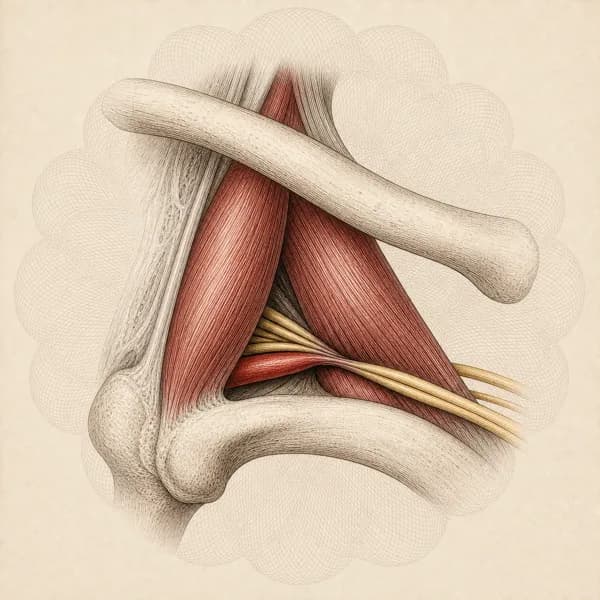
TOS involves compression of nerves or blood vessels between the neck and shoulder. This can occur at multiple sites including , first rib, or pectoralis minor.
Contributing factors
The is the narrow space between the neck, the collarbone and the first rib, where the nerves and blood vessels to the arm pass. Raising the arm overhead narrows part of this space, which is why overhead work, sleeping with the arms above the head, or carrying heavy bags on the shoulders can bring symptoms on.
Some people have anatomy that leaves less room, such as an extra rib above the first rib (a rib) or a fibrous band, and a collarbone fracture that healed out of line can do the same. Others develop symptoms after a period of heavy overhead training or work, or after an injury to the neck or shoulder.
How the shoulder blades sit and move, how much the neck and upper chest muscles work during breathing, and how long you hold provoking positions are thought to contribute in some people. These factors vary between people and the evidence for each is limited, so the assessment looks for the ones that change your symptoms.
Research
What the studies show
Rehabilitation is a central part of recovery from the nerve type of TOS
A 2024 clinical review in the Journal of Athletic Training describes TOS as hard to diagnose, with no single test accepted as definitive, and describes rehabilitation as a vital part of recovery for the nerve type, and for the artery and vein types after surgery.
Supports a structured rehab trial first for the nerve type of TOS, with the blood vessel types going to a vascular surgeon.
Hock G, Johnson A, Barber P, Papa C. Current clinical concepts: rehabilitation of thoracic outlet syndrome. J Athl Train. 2024;59(7):683-695. PMID: 39048118.
Related Conditions
Conditions I commonly see alongside, or confused with, this one.
Neck Pain & Stiffness
Both involve cervical spine region; neck posture affects thoracic outlet space
Postural Dysfunction
Shoulder blade position and breathing pattern can add to thoracic outlet symptoms
Carpal Tunnel Syndrome
Both cause arm numbness and tingling; TOS affects more proximal nerve compression
Shoulder Impingement Syndrome
Both involve poor shoulder blade mechanics and postural dysfunction
Whiplash
Thoracic outlet symptoms sometimes start after a neck injury
Getting back to it
Physiotherapy for thoracic outlet syndrome, built around the activity you want back.