Biceps Tendinopathy
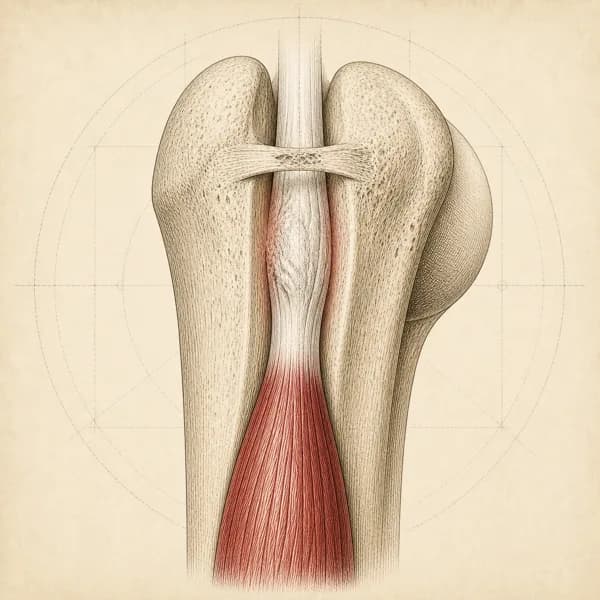
Biceps tendinopathy is pain in the upper biceps tendon (the long head), which runs over the front of the shoulder and into the joint. It usually builds up gradually and hurts at the front of the shoulder when reaching overhead or lifting. It often occurs alongside rotator cuff problems.
Key points
- What usually helps
- Loading the tendon with slow, heavy exercises built up over time.
- What you can do now
- Swap the lifts that flare it. Start with static holds.
- How long it takes
- Many cases improve within 6 to 12 weeks of the right loading.
- When to see a doctor first
- Some signs need emergency care. Check the list before you start treatment.
Symptoms
Does this sound like you?
- Pain at the front of the shoulder
- Pain with overhead activities
- Tender to press over the groove where the biceps tendon runs (bicipital groove)
- Pain when bending the elbow against resistance
- Clicking sensations
Often alongside it
- Pain spreading down the arm
- Night pain
- Weakness with lifting
- Rotator cuff problems alongside it
- Moving differently to work around the pain
Comes on gradually. Pain with particular movements. Often goes with other shoulder problems.
Before using this comparison, check when these symptoms need a doctor first.
When to see a doctor first
Go to emergency
Pain at the front of the shoulder or arm with chest pain, shortness of breath or sweating, or pain that comes on with exertion
Call 911. Heart problems can show up as shoulder and arm pain
A hot, red, swollen shoulder, or shoulder pain with fever or feeling unwell
Go to emergency now
Check with your doctor
A sudden pop with a bulge in the upper arm (a Popeye shape), especially if you are younger and use your arm for heavy work or sport
See your family doctor within a few days to discuss whether a surgical opinion is worthwhile
Shoulder pain with a history of cancer, unexplained weight loss, or constant pain at night
See your family doctor before starting physiotherapy
Treatment
How it is treated
Main approach. Loading the tendon with slow lowering (eccentric) and slow, heavy exercises, built up over time, can help pain and function for many people with biceps tendinopathy, though evidence on how much to do for the biceps specifically is still limited.
Alongside it. Rotator cuff and shoulder blade work is usually part of the plan, because biceps problems often occur alongside cuff problems.
Managing it over time. Keeping up cuff and shoulder strength and building pressing and overhead load gradually may lower the chance of a flare.
A typical rehabilitation progression
Three phases, from settling symptoms to returning to full activity.
Recovery from biceps tendinopathy is usually staged: calm the symptoms first, then rebuild the strength and capacity of the area, then return to your full activities. The phases below show how that can progress.
Phase 1Calm the Tendon With Static Holds
Calm the tendon and the surrounding shoulder structures while keeping the biceps loaded in a way it tolerates. A static hold, where the muscle works without the joint moving (an ), can be a manageable way to begin. It eases pain for some people, but not consistently, and evidence on how much to do for the biceps specifically is limited, so I set the effort and hold time by your response and use another option if it aggravates symptoms. I also start cuff and shoulder blade work early, because biceps symptoms often come with cuff problems (a 2014 review by Redondo-Alonso and colleagues).
Example exercises
- Static hold bending the elbow against resistance (isometric elbow flexion), with the elbow part-way bent in a pain-free position, 30 to 45 seconds at a moderate, comfortable effort, 4 to 5 repetitions daily
- Static hold turning the palm up against a doorframe or towel (isometric supination), at a similar effort
- Static holds turning the arm outward and pressing it out to the side, elbow at your side, to load the cuff without irritating the tendon in its groove
- Shoulder blade setting and squeeze holds with a band (drawing the shoulder blades back), to get the muscles at the back of the shoulder working again
- Activity review: dropping upright rows, wide-grip bench press, deep dips and heavy preacher curls for now
Possible progression milestones
Low pain at the front of the shoulder at rest, night pain manageable, and the static holds feeling comfortable without a flare that lasts into the next day.
Phase 2Progressive Loading Through Range
Move from static holds to slow, heavy loading through the range you have, alongside continued cuff and shoulder blade work. Evidence for tendon pain more broadly (work by Alfredson, Beyer and others on the Achilles and kneecap tendons) supports moving on from static holds once pain allows. How much to do for the biceps specifically is less defined, so I adjust the load by how you respond rather than following a fixed protocol.
Example exercises
- Dumbbell hammer curls and neutral-grip curls (thumbs up), 3 sets of 8 to 12 reps, lowering over 3 seconds (the phase), progressed weekly
- Cable or band rows with the elbow in a neutral pulling line, to load the muscles of the upper back
- Side-lying external rotation (turning the top arm outward) and Y, T and W arm lifts lying face down, for the cuff and the muscles that steady the shoulder blade
- Landmine press (pressing up one end of a barbell whose other end is anchored at the floor) and half-kneeling press progressions, to bring back pressing at angles short of straight overhead
- Strength work turning the palm up (supination) with a weighted hammer or dumbbell, gripped close to the weighted end first (short lever), then further down the handle (long lever)
Possible progression milestones
Elbow bending and forearm turning strength getting closer to the other side, full-range curls and rows at moderate load, and overhead reach without sharp pain at the front of the shoulder.
Phase 3Return to Overhead, Throwing, and Heavy Pressing
Rebuild the ability of the biceps and cuff to handle load at the end of the range and at speed. Return to sport is guided by strength, shoulder blade control and how the shoulder copes, rather than by time alone. This phase helps overhead athletes and lifters prepare for the demands of their sport, although a flare can still happen; if it does, I review the plan with you.
Example exercises
- Overhead press progressions, from a landmine press to full barbell and dumbbell presses
- Bench press progression: close-grip and narrow-grip work before full-range wide-grip
- Pull-up, chin-up and weighted row progressions, heavy enough to build strength
- Fast throw-and-catch and reaction work (): medicine ball chest passes, overhead throws and rebounder drills, for throwing athletes
- Drills for your sport or job (throwing technique, swim stroke, overhead lifting), with the amount built up in planned steps
Possible progression milestones
Strength close to the other side for elbow bending, forearm turning, outward rotation and pressing, pre-injury loads and speeds managed without pain, and confidence in the shoulder during unplanned or reactive movements.
What you can do now
- Swap the lifts that flare it. For now, swap upright rows, behind-the-neck presses, wide-grip bench press, deep dips and heavy preacher curls for hammer curls, neutral-grip rows, landmine press and close-grip bench. Loading can still be heavy, just chosen to avoid squeezing the tendon hard in its groove.Bring the movements that flared it back gradually, in planned steps, as symptoms settle. A sudden pop with a bulge in the upper arm (a Popeye shape) is one of the warning signs on this page: see your family doctor within a few days.
- Start with static holds. Hold the elbow part-way bent, in a pain-free position, and press against resistance without the joint moving. Phase 1 uses 30 to 45 seconds at a moderate, comfortable effort, 4 to 5 repetitions daily.Ease off if the holds leave a flare that lasts into the next day.
- Keep loading rather than waiting. Gradually increasing the load helps the tendon tolerate more over time. Early, consistent loading usually does better than waiting for the pain to pass and then jumping straight back into the training that flared it.Soreness that settles by the next morning is acceptable.
What I use in clinic
- Eccentric (slow lowering) training. Commonly used and may help, though evidence specific to the biceps tendon is limited.
- Rotator Cuff and Shoulder Blade Strengthening. Can help the shoulder share load so the biceps tendon is less irritated.
Recovery
How long it takes
Most cases improve within 6 to 12 weeks of appropriate loading.
Most cases settle with loading over weeks to months. In older adults the tendon sometimes ruptures, which often causes surprisingly little loss of strength.
What changes the timeline
- Other shoulder problems alongside it, such as a rotator cuff problem
- How long you have had symptoms
- Keeping up the loading exercises
- Age
How I track it. I track how much the pain gets in the way of the tasks that matter to you, how well you move when I test those tasks in clinic, and how confident you feel in daily activities
Similar conditions
Conditions that can feel similar
- Rotator Cuff Tendinopathy or Tear (Supraspinatus or Subscapularis)
- Pain spreads to the outer upper arm (over the deltoid) rather than the groove at the front, with a painful arc overhead and weakness turning the arm outward or lifting it out to the side against resistance. A problem with the front cuff tendon (subscapularis) can cause pain at the front, but pressing the hand into the stomach or lifting it off the lower back against resistance (belly-press and lift-off tests) points to the cuff rather than the biceps groove.
- SLAP Lesion (Superior Labrum Anterior-Posterior Tear)
- Deep clicking or clunking with overhead movement, pain when holding the arm out in front, thumb down, against downward pressure (O'Brien active compression test), and a worry that the shoulder will slip when the arm is turned fully outward. More common in younger throwing athletes, and often occurs with a biceps tendon problem, because the biceps tendon anchors to the labrum.
- Subacromial Pain Syndrome
- A painful arc lifting the arm (60 to 120 degrees), pain when the arm is raised or turned in set positions (Neer and Hawkins-Kennedy tests), and pain spreading to the outer upper arm. The biceps groove itself is typically not tender to press when the problem is subacromial pain alone.
- AC Joint Pathology
- Pain pinpointed at the top of the shoulder over the AC joint, which is tender to press, and pain when reaching across the body (cross-body adduction). The biceps tests (Speed and Yergason) are often pain-free, which helps tell it apart from a biceps problem, although the two can coexist.
- Cervical Radiculopathy (C5-C6)
- Arm pain that follows the path of one nerve from the neck. Tilting the head and pressing down on it brings it on (Spurling test), and there may be nerve signs such as a changed reflex or weakness in particular muscles. Moving the shoulder for you and testing the biceps against resistance are typically pain-free.
- Pectoralis Major Strain or Tear
- Pain at the front of the chest or the front fold of the armpit rather than the biceps groove. After a tear (often a bench press injury) there is bruising and a gap you can feel, and weakness bringing the arm across the chest against resistance. A history of one specific overload moment makes the picture clearer.
Questions
What patients ask me most
How do I know the pain is actually from the biceps tendon?
It is tricky, because many problems can cause pain at the front of the shoulder. What I look for is a tender spot over the biceps groove that moves as the arm turns, pain when you lift the straight arm forward against resistance with the palm up (Speed test) or turn the palm up against resistance with the elbow bent to a right angle (Yergason test), and pain with overhead reaching that sits at the front of the shoulder rather than the side. No single test is definitive (Churgay, Am Fam Physician 2009), which is why I test the cuff and labrum at the same visit to rule out more common drivers.
Is my biceps tendon the whole problem or is it my rotator cuff?
It is often both. Imaging and surgical studies show that long head of biceps problems become more common as rotator cuff tears get larger (Redondo-Alonso and colleagues, 2014), and a cuff that is not controlling the ball of the joint well may change how the biceps tendon is loaded. I also assess the rotator cuff, because it can contribute to front-of-shoulder symptoms and may need treatment alongside the biceps.
Will eccentric exercises fix it?
Eccentric (slow lowering) exercises are useful but not a magic protocol for this specific tendon. Scoping reviews of physical therapy for long head of biceps tendinopathy describe eccentric training, general exercise, stretching, and hands-on treatment (manual therapy) as the main interventions in the literature, and flag that specific dosing guidelines for the biceps are much less developed than for the Achilles or patellar tendon. I use progressive loading with a heavy eccentric emphasis, but dosed against the individual shoulder rather than a fixed protocol.
Can the long head of the biceps tendon rupture?
Yes, and in the right patient it is often a reasonable outcome rather than an emergency. Rupture of the long head typically happens in older adults whose tendon is already worn (degenerative change), often during a lift or sudden pull. It produces a classic 'Popeye' deformity where the muscle belly bunches lower in the arm. Strength loss is often smaller than people expect, although some people notice it when turning the forearm or lifting with the elbow bent. Some people find their front-of-shoulder pain eases after the tendon ruptures. Surgical repair is usually reserved for younger people with high demands on forearm turning strength, and is not routine when a worn tendon ruptures.
Should I consider a tenodesis or tenotomy?
Only if non-surgical care has genuinely been exhausted and symptoms are still limiting function. Meta-analyses comparing tenotomy and tenodesis have generally found similar pain and function outcomes. Cutting the tendon (tenotomy) more often leaves the 'Popeye' bulge, while reattaching it lower down (tenodesis) may better protect the strength to turn the palm up (supination). I usually suggest 3 to 6 months of structured loading and adjusted activities before any surgical conversation, and then the discussion is with a shoulder surgeon based on what the patient actually needs to do.
Why does it hurt when I reach overhead?
Overhead reaching loads the long head of the biceps where it runs over the front of the shoulder and through its groove, and an irritated tendon can be sensitive to that. How well the rotator cuff and shoulder blade are working also seems to matter, although the exact mechanics are not fully established. That is why much of the treatment works on the cuff, the shoulder blade and upper back movement, not just the biceps itself.
Can I still lift weights?
Usually yes, with changes. Exercises that tend to flare biceps tendinopathy early are upright rows, behind-the-neck presses, wide-grip bench press, dips that dip deep, and heavy preacher curls. I initially swap toward hammer curls, neutral-grip rows, landmine press, and close-grip bench. Loading can still be heavy, just chosen to avoid squeezing the tendon hard in its groove. As symptoms settle, the movements that flared it come back in a structured progression.
How long will this take to settle?
Most isolated cases of biceps tendinopathy improve meaningfully over 6 to 12 weeks of structured loading and activity modification, with full return to sport or heavy lifting often at 3 to 6 months. The longer timelines are usually linked to a rotator cuff problem alongside it or a delayed start. Early, consistent loading beats waiting for the pain to pass and then trying to jump straight back into the training that flared it.
The science
The Science of Biceps Tendinopathy
Biceps involves of the long head of biceps tendon. The tendon runs through the and into the shoulder joint, making it vulnerable to and wear.
Contributing factors
The long head of the biceps starts inside the shoulder joint, turns over the top of the arm bone and runs down a groove at the front of the shoulder. Overhead reaching, throwing, and pressing or pulling with the arm away from the body all load it there.
Biceps pain at the shoulder often comes with problems, and biceps changes are more common as cuff tears get larger (Redondo-Alonso and colleagues, 2014). That is why the plan usually works on the cuff and shoulder blade muscles as well as the biceps.
A jump in training load is a common trigger: more overhead sport, more swimming, or more pressing and pulling in the gym. Wide-grip bench press, upright rows and deep dips are frequent aggravators, so I swap them for gentler versions for a while and bring them back gradually.
Research
What the studies show
Biceps tendon problems often occur alongside rotator cuff problems
Problems in the upper biceps tendon (the long head) commonly occur with rotator cuff problems, and scans and surgical studies consistently show the biceps is involved more often as rotator cuff tears get larger. A systematic review (Redondo-Alonso and colleagues, 2014) supports this link. It fits with the idea that when the rotator cuff no longer holds the ball of the shoulder down and centred in its socket, extra load falls on the biceps tendon.
Assessment and treatment need to look at the rotator cuff too, because biceps symptoms may be driven by a rotator cuff problem.
Redondo-Alonso L, Chamorro-Moriana G, Jiménez-Rejano JJ, et al. Relationship between chronic pathologies of the supraspinatus tendon and the long head of the biceps tendon: systematic review. BMC Musculoskelet Disord. 2014;15:377. PMID: 25408141.
Related Conditions
Conditions I commonly see alongside, or confused with, this one.
Getting back to it
Physiotherapy for biceps tendinopathy, built around the activity you want back.