
Everyday symptoms
Buttock Pain When Sitting
If a gradual ache low in one buttock builds on a hard chair, try a cushion on the seat. Pain right in the middle at the base of the spine calls for a different seat adjustment. If the pain burns or tingles down a leg, note how far it travels. New weakness is a reason to get checked today.
Rich et al., 2025; NHS, 2025; MyHealth Alberta (accessed), 2026; MyHealth Alberta (accessed), 2026When to see a doctor firstWhat to try the next time you sit
For a gradual ache over one sitting bone, try a cushion that spreads your weight across the seat. During a meeting, change position or get up for a walk when the familiar ache starts to build. On a long drive, use a safe stopping place for a break. Rich et al., 2025
If the sore point is in the middle at the tailbone, try a coccyx cushion that leaves space beneath that spot. Notice whether sitting down and getting up feel easier. You can judge a seat change by how comfortable the next meal or journey feels. NHS, 2025; Rich et al., 2025
When to see a doctor first
Go to emergency
Buttock or leg pain comes with new numbness around your genitals or anus, trouble starting or emptying your bladder, or a change in your ability to feel or control bladder or bowel movements.
Go to emergency now if any one of these occurs. NHS, 2024
You develop shooting or burning pain down the backs of both legs, or weakness or numbness in both legs is severe or getting worse.
Go to emergency now. NHS, 2024
After a fall or other injury you have severe pain around the hip, or you cannot walk or put weight on the leg.
Go to emergency now. NHS, 2025
Get seen today
With pain travelling down one leg, your foot starts to slap or drag when walking, or the leg is getting weaker.
Get medical assessment today. MyHealth Alberta (accessed), 2026; MyHealth Alberta (accessed), 2026
A sprint, slip or sudden stretch injures the area just below your buttock and leaves severe pain, substantial or growing bruising, or difficulty walking.
Get assessed today for a possible upper hamstring tear. Pause running and stretching the injured leg until you are seen. NHS, 2025; NHS, 2025
One sitting bone, the tailbone or down the leg?
The sitting bones are the two bony points low in the pelvis. Your weight passes through the soft tissue under them when you sit. The upper hamstring tendons attach there, and the muscles run down the back of each thigh. The tailbone is in the middle at the end of the spine. Rich et al., 2025; NHS, 2025
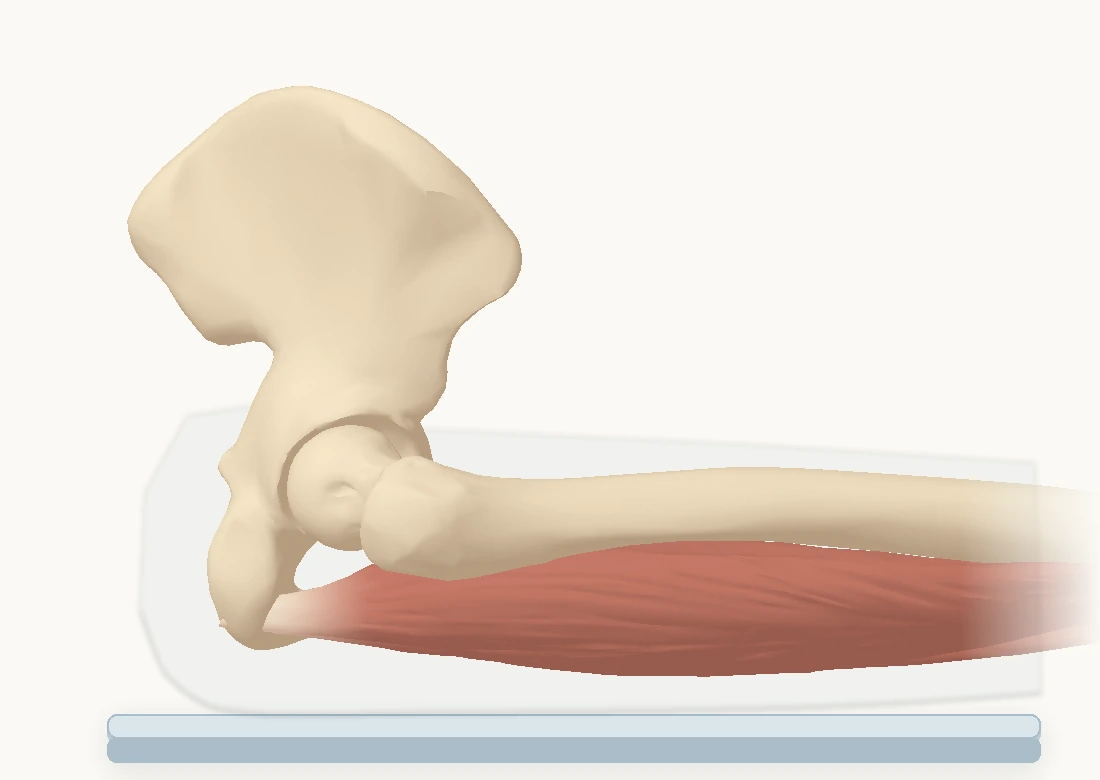
- Sitting boneThe rounded lower part of the pelvis is close to the seat.
- Upper hamstring attachmentThe tendon attaches just below and behind the hip joint at the sitting bone.
- One spot under the buttock
- A hard bench can press on the upper hamstring attachment. If a hill, a faster run or a deep lunge brings on the same ache in that spot, tell your clinician. Those activities load the tendon in ways that an examination can help sort out. Rich et al., 2025
- In the middle at the tailbone
- Tailbone pain can be especially noticeable as you sit down or rise from a chair. A fall directly onto the area is worth mentioning, even if it happened before you noticed which chairs hurt. NHS, 2025
- Burning, pins and needles or numbness down a leg
- Pain can travel from the buttock down the back of the thigh, sometimes into the foot or toes. That pattern gives a reason to check the lower back and nerves, even when your back hardly aches. Mention any change in foot movement or walking. MyHealth Alberta (accessed), 2026; NHS, 2024; MyHealth Alberta (accessed), 2026
What happens between periods of sitting?
Suppose a long drive and the uphill part of your usual walk both bring on the same low, one-sided ache. Try a flatter route while you experiment with the seat. Keep the walking and other movement you can do comfortably. As it settles, gradually return to the hills or longer walks you want to manage. Rich et al., 2025
Book with a physiotherapist or your family doctor if pain keeps returning, is worsening or is cutting short ordinary activities. For central tailbone pain, a few weeks without improvement despite changes at home is another reason to book. Describe where the pain starts, whether it spreads and what standing up changes. NHS, 2025; NHS, 2024; NHS, 2025
What has been studied for persistent pain at the sitting bone?
A trial enrolled 100 adults with at least three months of gradual pain and clinically diagnosed upper hamstring . It compared individualized physiotherapy with . Both groups had six appointments and received advice about sitting. The groups showed no clear difference in pain and function, overall change or sitting tolerance through one year. Rich et al., 2025
The trial compared complete treatment programs. It leaves open how much a particular cushion or schedule of standing breaks helps on its own. Rich et al., 2025; Rich et al., 2025
Questions
Should I stretch my hamstring after a long drive?
If leaning over a straight leg reproduces the familiar ache right at the sitting bone, ease off that stretch for now. A short, comfortable walk is another way to move after sitting. With persistent tendon pain, a physiotherapist can help you gradually build tolerance for bending at the hip and loading the hamstring. Rich et al., 2025
Does pain when sitting mean I have piriformis syndrome?
Several problems can make sitting uncomfortable. Irritation of the deep in the buttock is one possibility. A clinician can examine your back, hip, strength and sensation to assess where the symptoms may be coming from. A painful car ride alone does not identify a particular muscle. Martin et al., 2014; MyHealth Alberta (accessed), 2026
Can it be sciatica even if my back feels fine?
Yes. Sciatica can be felt mainly in one buttock and leg, sometimes as far as the toes. A in the lower back can cause symptoms farther down its path. Get medical assessment today if your foot starts dragging or slapping as you walk, or if the leg is getting weaker. MyHealth Alberta (accessed), 2026; NHS, 2024; MyHealth Alberta (accessed), 2026
How often should I get up from my desk?
Use your usual sitting tolerance as a starting point. If discomfort builds partway through a meeting, try changing position or taking a brief standing break earlier next time. The research on upper hamstring pain has not established one ideal break interval. Rich et al., 2025; Rich et al., 2025; NHS, 2025
Sources and further reading
- Rich et al. · 2025 · International Journal of Sports Physical Therapy
Treatment of Proximal Hamstring Tendinopathy with Individualized Physiotherapy: A Clinical Commentary.
The authors describe a programme that adjusts sitting pressure and deep hip bending, then gradually rebuilds loading. They suggest an appropriate seat height, less time on hard surfaces and a cushion where useful.
- NHS · 2025 · Patient information
Tailbone (coccyx) pain
Tenderness at the base of the spine may be worse when sitting or rising. The advice includes a coccyx cushion and short breaks from sitting.
- MyHealth Alberta (accessed) · 2026 · Patient information
Sciatica
Pain running from the back or buttock down the leg can accompany tingling, numbness or weakness. The page describes how irritation of a nerve root in the lower back can produce symptoms farther down the leg.
- MyHealth Alberta (accessed) · 2026 · Patient information
Low Back Pain
New or increasing leg weakness calls for immediate medical advice. A foot that newly drags or slaps during walking is an example to report.
- NHS · 2024 · Patient information
Sciatica
With back or leg symptoms, new numbness around the genitals or anus, difficulty passing urine or a new loss of bladder or bowel control calls for emergency assessment.
- NHS · 2025 · Patient information
Hip pain in adults
Gives urgency advice for sudden severe pain, a hot or swollen hip, severe pain after injury, inability to bear weight, and pain that repeatedly disrupts sleep or everyday activity.
- NHS · 2025 · Patient information
Hamstring injury
The guidance calls for urgent assessment after a hamstring injury with worsening pain, substantial or growing bruising or swelling, or difficulty standing or walking.
- Rich et al. · 2025 · The American Journal of Sports Medicine
Physiotherapy Compared With Shockwave Therapy for the Treatment of Proximal Hamstring Tendinopathy: A Randomized Controlled Trial.
The trial compared two treatment programmes in 100 adults with proximal hamstring tendinopathy. Both groups received education. The groups did not differ significantly in overall improvement, function or sitting tolerance. Cushion choices were part of advice about sitting.
- Martin et al. · 2014 · Knee Surgery, Sports Traumatology, Arthroscopy
Diagnostic accuracy of clinical tests for sciatic nerve entrapment in the gluteal region.
The study compared clinician-performed examination manoeuvres with findings at endoscopy in a selected surgical group. It did not evaluate sitting pain as a stand-alone diagnostic test.