
Hamstring injury and rehabilitation
Proximal Hamstring Avulsion: Injury and Treatment
A proximal hamstring avulsion means a tendon has pulled away from its attachment at the sitting bone, high at the back of the thigh. The injury needs prompt medical assessment. Once its extent is clear, the treatment discussion considers surgery, non-surgical rehabilitation and the activities you want to recover.
Yetter et al., 2024; Pihl et al., 2024When to see a doctor firstThe injury is at the tendon attachment
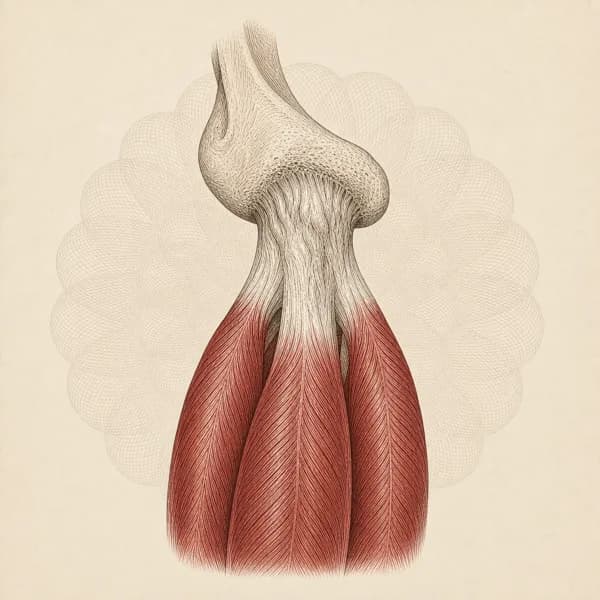
The hamstrings help bend your knee and move your thigh behind you. Most attach to the ischial tuberosity, the part of the pelvis commonly called the sitting bone. An avulsion separates part or all of a tendon attachment from that bone. More than one tendon may be involved. Yetter et al., 2024
The history often includes a sudden forceful stretch or contraction, such as a slip into the splits, a waterskiing fall or a lunge. Pain high in the back of the thigh can be followed by bruising, weakness and difficulty walking. Nerve symptoms sometimes accompany the injury. Yetter et al., 2024
A hamstring strain usually involves muscle or the area where muscle and tendon meet. Proximal hamstring tendinopathy commonly develops more gradually. Pain in the same region can therefore lead to different assessments and rehabilitation plans. Martin et al., 2022; Yetter et al., 2024
What the examination and MRI need to clarify
Assessment considers how the injury happened, walking, bruising, strength and any changes in sensation or foot movement. Magnetic resonance imaging (MRI) can show which tendons are involved, whether the tear is partial or complete, and how far a detached tendon has moved from the bone. That movement is called retraction. Yetter et al., 2024
The MRI description becomes part of a treatment discussion that also includes when the injury occurred, your general health and the demands you want to return to. A partial injury, an acute complete avulsion and a longstanding retracted tear can raise different questions. Yetter et al., 2024; Pihl et al., 2019
I cannot order imaging. When it would change the plan, I flag it to your family doctor and refer you for the appropriate medical assessment. A suspected avulsion needs that assessment before starting the general exercise progression for a muscle strain.
When to see a doctor first
Go to emergency
Sudden breathlessness, chest pain, coughing up blood or feeling faint, especially with a painful or swollen calf
Go to emergency now, or call 911 or your local emergency number. A clot in the lungs needs to be ruled out.
Get seen today
Sudden sharp sitting-bone pain in a teenager during sprinting or kicking
A piece of bone at the growing tendon attachment may have pulled away. Stop sport, keep weight off the leg and get medical assessment today.
New weakness at the ankle or foot, or numbness that is spreading down the leg
Get medical assessment today to check the nerve supply to the leg.
Calf swelling, warmth or tenderness after injury, surgery or reduced activity
Get same-day medical assessment to rule out a blood clot in the leg.
Check with your doctor
A sudden pop high at the sitting bone with substantial bruising, marked weakness or difficulty walking
Possible proximal hamstring avulsion. Get an urgent surgical opinion within days through your family doctor, a sports medicine physician or emergency. Assessment is needed to decide the treatment plan.
Choosing between repair and non-surgical care
Surgical repair reattaches the tendon to the bone. Non-surgical care uses an assessed rehabilitation plan to rebuild useful function without that operation. Both involve protection, progressive exercise and follow-up. The consultation should address the expected benefits, the risks of repair and the practical demands of each recovery. Pihl et al., 2019; Yetter et al., 2024
The PHACT randomized trial studied 119 active adults aged 30 to 70 with acute complete avulsions involving at least two proximal tendons. At two years, non-surgical care met the study’s standard for being no worse on its main hamstring-function outcome. Both groups followed a structured rehabilitation program. Pihl et al., 2024; Pihl et al., 2019
Everyday function and a full return to sport were separate outcomes. More people in the repair group reported a full sporting return, but that was a secondary result with uncertainty. Someone aiming to walk comfortably and someone aiming to sprint competitively may weigh those outcomes differently. Pihl et al., 2024
Discuss the activity you want back in concrete terms: sitting through work, climbing stairs, running, lifting or playing a particular sport. Ask how the injury and your health affect the options, what protection each plan requires and what would prompt a review. Children with a bony avulsion and longstanding injuries need their own assessment; they were outside this trial’s population. Pihl et al., 2019; Yetter et al., 2024
A closer look at the PHACT results
At the two-year assessment, full sporting return was reported by 31 of 54 participants after surgery and 23 of 57 after non-surgical care. This was self-reported and separate from the main function questionnaire. The secondary comparisons were not adjusted for the number of outcomes examined, so they do not provide a firm individual prediction. Pihl et al., 2024
Protection and strength have different roles in recovery
Early rehabilitation follows the plan for the assessed injury or repair. Instructions may cover walking aids, a brace, the amount of weight through the leg and limits on movement or exercise. Postoperative protocols vary, so the written instructions from the treating team guide this stage. Yetter et al., 2024
As the plan allows, exercise rebuilds movement, hamstring strength and the ability to manage daily activities. Later work becomes more demanding and more specific to the activity you want back. The post-surgical rehabilitation page explains how the surgeon’s precautions and exercise progression work together. Yetter et al., 2024; Pihl et al., 2019
A new loss of strength, changing nerve symptoms or a substantial setback deserves reassessment. Difficulty progressing can mean reviewing the injury, the current exercise demands or another problem affecting recovery. Follow-up remains useful whichever treatment route was chosen. Yetter et al., 2024
Connect rehabilitation with the activity you want back
Comfortable walking, stronger exercise performance and readiness for fast running can arrive at different stages. Returning to an adapted training session is also different from regaining your previous performance. A useful plan makes the next activity goal clear and checks how you respond to it. Ardern et al., 2016
For example, a recreational runner may first be working toward comfortable daily walking. Later goals could include tolerating a run, repeating it within the week and rebuilding the pace or distance they value.
The return-to-training guide explains how exercise, testing and practice fit together. It complements the injury-specific plan and the sports rehabilitation page. Ardern et al., 2016
Questions
Does getting a surgical opinion mean I will need surgery?
No. The assessment defines the injury and allows the options to be discussed while they remain appropriate. Repair and non-surgical rehabilitation can both be considered for selected adults. Your injury, health and goals help determine the plan. Pihl et al., 2024; Yetter et al., 2024
Can I use hamstring-strain exercises while waiting for assessment?
A suspected avulsion needs medical assessment first. Until the injury and protection plan are clear, avoid testing it with hard stretches, heavy hamstring exercise or running. Follow the advice given about walking and support. Yetter et al., 2024
How long until I can run again?
That depends on the injury, the chosen treatment and your recovery. Permission to increase loading, comfortable walking, strength and tolerance of the next task all contribute. Your treating team sets the progression; the general return-to-training guide explains the later activity questions. Yetter et al., 2024; Paton et al., 2023
Sources and further reading
- Yetter et al. · 2024 · Current Reviews in Musculoskeletal Medicine
Management of Proximal Hamstring Injuries: Non-operative and Operative Treatment.
Reviews anatomy, presentation, imaging and treatment considerations. Its surgical recommendations predate the PHACT trial results and need to be read alongside that randomized evidence.
- Pihl et al. · 2024 · NEJM Evidence
Operative versus Nonoperative Treatment of Proximal Hamstring Avulsions.
A randomized comparison in active adults aged 30 to 70 with acute complete avulsions. Non-surgical care met the trial’s noninferiority criterion for hamstring function at two years. Full sporting return was a separate secondary outcome.
- Martin et al. · 2022 · Journal of Orthopaedic & Sports Physical Therapy
Hamstring Strain Injury in Athletes.
A guideline for sports-related hamstring muscle and muscle-tendon strains. Its stated scope should be kept distinct from a tendon avulsion or a postoperative protection plan.
- Pihl et al. · 2019 · BMJ Open
The proximal hamstring avulsion clinical trial (PHACT)-a randomised controlled non-inferiority trial of operative versus non-operative treatment of proximal hamstrings avulsions: study protocol.
Describes eligibility, surgical reattachment and the rehabilitation plan used in both groups. This is the trial’s protocol, with results reported in the 2024 paper.
- Ardern et al. · 2016 · British Journal of Sports Medicine
2016 Consensus statement on return to sport from the First World Congress in Sports Physical Therapy, Bern.
Distinguishes return to participation, return to sport and return to performance. It presents return as a shared process informed by the injury, the activity and the athlete’s goals.
- Paton et al. · 2023 · British Journal of Sports Medicine
London International Consensus and Delphi study on hamstring injuries part 3: rehabilitation, running and return to sport.
Experts supported individualized rehabilitation, progressive running and consideration of sporting demands. They did not agree on universal strength or flexibility benchmarks. Pain-free sprinting received consensus support.