
Everyday symptoms
Shoulder Clicking
You can usually keep using your shoulder if a familiar click is painless and your arm works as usual. Book an assessment if a painful catch keeps stopping your reach or your shoulder repeatedly gives way. If you lose strength or struggle to lift your arm after a fall or sudden pull, get medical assessment today.
University Hospitals of Morecambe Bay (accessed), 2026; AAOS OrthoInfo (accessed), 2026; AAOS OrthoInfo (accessed), 2026; Craig et al., 2017When to see a doctor firstCan you finish the movement?
Think about the last time it happened. Did your arm move smoothly through the click, or did you have to lower it and reach a different way? Without a recent injury, a painful catch that keeps interrupting dressing or reaching, or a shoulder that repeatedly gives way, is a reason to book. If an injury felt like the joint slipped out and back in, get medical assessment today. University Hospitals of Morecambe Bay (accessed), 2026; AAOS OrthoInfo (accessed), 2026; AAOS OrthoInfo (accessed), 2026; NHS, 2023
When to see a doctor first
Go to emergency
After an injury, the shoulder looks out of place, you think it is dislocated, or you cannot move the arm at all.
Go to emergency now. Support the arm in a comfortable position and avoid trying to put the shoulder back yourself. NHS, 2026
After a shoulder injury, your hand or arm becomes cold or pale, or loses feeling.
Go to emergency now. Emergency Care BC, 2024; NHS, 2023
A newly painful, hot or swollen shoulder comes with fever, shaking chills or feeling generally ill.
Go to emergency now. A joint infection needs urgent treatment. Ravn et al., 2023; NHS, 2023
New shoulder or arm discomfort comes with chest pressure, unexplained breathlessness, a cold sweat, nausea or light-headedness.
Call 911. These can be signs of a heart attack. Public Health Agency of Canada, 2026
Get seen today
A fall, sudden pull or forceful lift leaves you unable to raise the arm to shoulder height or suddenly much weaker.
Get medical assessment today. A fracture, dislocation or torn rotator cuff tendon can affect lifting. Keep the injured arm supported until it is assessed. Craig et al., 2017; NHS, 2026
Your shoulder suddenly becomes very painful or very swollen, or it becomes newly hot and painful even without a fever.
Get medical assessment today. Ravn et al., 2023; NHS, 2023
Near the shoulder blade or deep in the joint?
As you lift your arm, the ball at the top of the arm bone moves in its socket. The socket is part of the shoulder blade, which also moves over the back of your rib cage. Where you feel a click can help a clinician decide which movement to watch. AAOS OrthoInfo (accessed), 2026; AAOS OrthoInfo (accessed), 2026
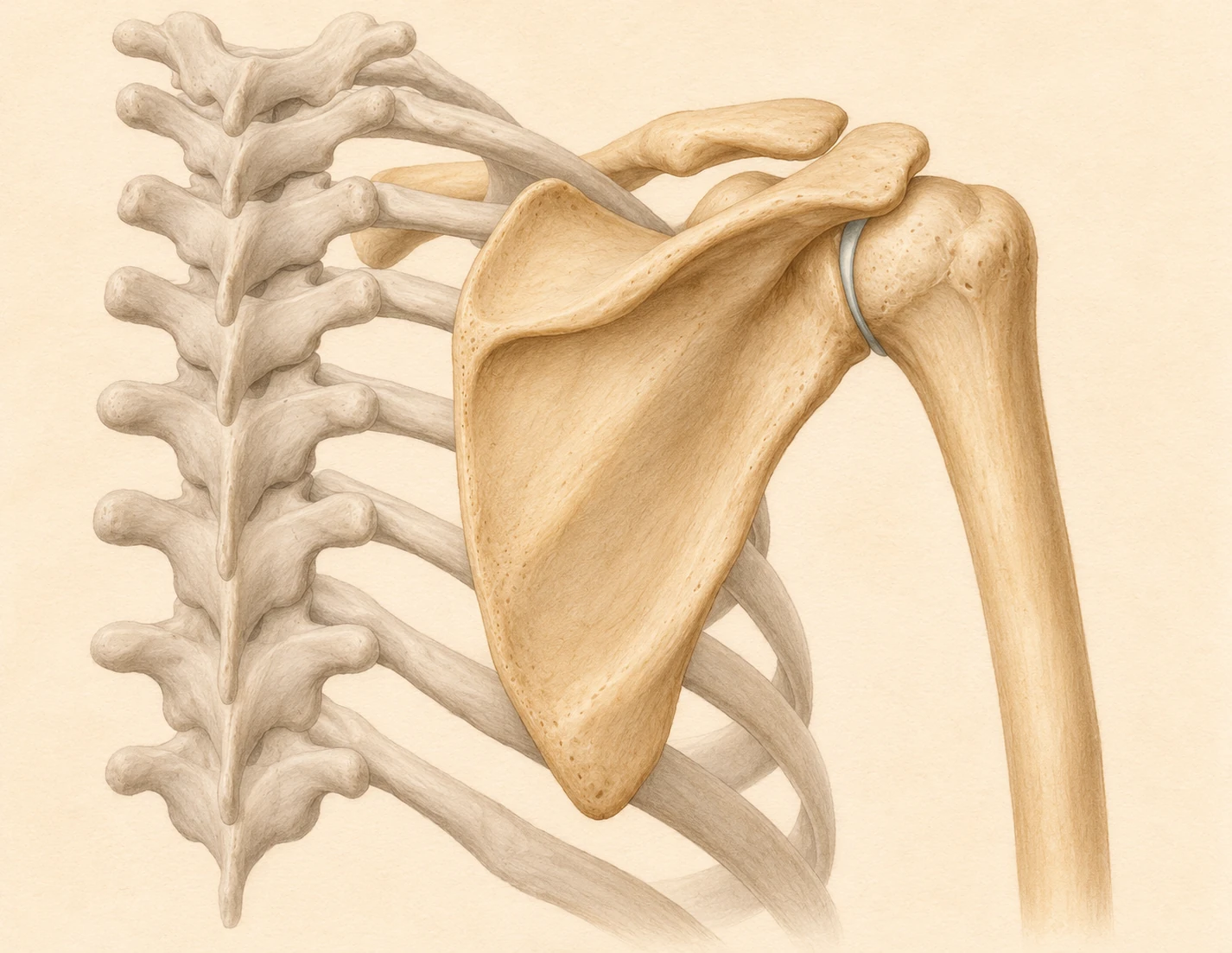
- Shoulder blade over the ribsThe inner edge of the blade sits near the spine. The blade moves over the ribs as the arm rises.
- Ball-and-socket jointThe top of the upper arm bone sits in the socket on the outer edge of the blade.
- Along the inside edge of the shoulder blade
- You might notice rubbing or snapping beside the spine as the arm rises or lowers. If it is sore, point out the spot. A clinician can watch how the blade moves with the arm and check where you are tender. AAOS OrthoInfo (accessed), 2026
- A catch deep in the shoulder
- A painful catch that makes you pause halfway through pulling on a coat is worth describing. Several shoulder problems can feel like this. Tell the clinician what stopped the movement and whether you could finish it. AAOS OrthoInfo (accessed), 2026; NHS, 2023
- A feeling that the joint shifts or gives way
- can feel as though the ball is about to come out of the socket. If a new injury felt like a slip out and back in, get medical assessment today even if the shape now looks normal. Mention any earlier dislocations. AAOS OrthoInfo (accessed), 2026; NHS, 2026; NHS, 2023
Did clicking predict a rotator cuff tear on MRI?
Researchers studied people sent for MRI because their examination or ongoing symptoms suggested a problem. Of the 99 who completed imaging, about six in ten reported clicking or popping. Those symptoms did little to distinguish people with a cuff tear from those with an intact cuff. The study cannot tell what makes a comfortable shoulder click during normal use. Zhang et al., 2024
When one particular lift is sore
If there was no injury, the arm feels steady and just one repeated lift is sore, change that task for now. For example, move a stack of plates to a lower shelf or lift one plate at a time. Keep using the arm for comfortable daily tasks. As the soreness eases, work back towards the reach and weight you usually manage. University Hospitals of Morecambe Bay (accessed), 2026; NHS, 2023
Book with a physiotherapist or your family doctor if the pain is getting worse, a catch repeatedly stops you, or reaching is becoming difficult. For milder soreness, a lack of improvement after about two weeks is another reason to book. Tell them whether lifting, lowering or carrying is the part that changed. NHS, 2023; AAOS OrthoInfo (accessed), 2026
Questions
Does a deep click mean I tore my labrum?
The is the rim of cartilage around the shoulder socket. An injury to it can cause pain, catching or a sense of instability. Other shoulder problems share these symptoms, so a click alone gives too little information to identify a tear. Your injury history and what happens when you use the arm are helpful starting points. AAOS OrthoInfo (accessed), 2026; AAOS OrthoInfo (accessed), 2026
Should I stop strength training if my shoulder clicks?
A familiar, painless sound with normal strength and movement usually allows you to continue. If one exercise becomes sore, try a lighter weight or a more comfortable range. Stop that lift and get assessed if the shoulder feels unstable or a painful catch keeps interrupting the movement. University Hospitals of Morecambe Bay (accessed), 2026; NHS, 2023; AAOS OrthoInfo (accessed), 2026
Is a crunch near my shoulder blade a sign of poor posture?
Sound alone tells you little about posture. If the spot is painful, a clinician can watch the shoulder blade while you raise and lower the arm, then check its movement and the strength of nearby muscles. That gives more information about what might help. AAOS OrthoInfo (accessed), 2026; University Hospitals of Morecambe Bay (accessed), 2026
Do I need an X-ray or MRI to find the click?
A familiar painless click in a shoulder you can use normally seldom needs investigation. After an injury, an X-ray may be needed to check for a fracture or dislocation. If you still cannot lift the arm after those are ruled out, ask the assessing clinician or your family doctor about urgent review for a possible cuff tear. University Hospitals of Morecambe Bay (accessed), 2026; Craig et al., 2017; NHS, 2026
Sources and further reading
- University Hospitals of Morecambe Bay (accessed) · 2026 · NHS patient information
Shoulder pain
The physiotherapy guidance describes clicking and creaking as common. It also suggests staying active, easing back on movements that bring on recent pain and gradually returning to usual activity.
- AAOS OrthoInfo (accessed) · 2026 · Patient information
Shoulder Joint Labral Tear
The article describes catching, locking, popping and pain with movement as possible symptoms. Examination considers the history, motion, strength and stability before deciding which imaging might help.
- AAOS OrthoInfo (accessed) · 2026 · Patient information
Chronic Shoulder Instability
Repeated giving way and a feeling of slipping are symptoms clinicians look for when assessing instability, including after a dislocation.
- Craig et al. · 2017 · BMJ
Acute rotator cuff tears.
The authors recommend same-day assessment with X-rays after trauma when a person cannot lift the arm above shoulder height. This initial check looks for a fracture or dislocation.
- NHS · 2026 · Patient information
Dislocated shoulder
A suspected dislocation after injury needs emergency assessment. The guidance advises supporting the arm and leaving attempts to put the joint back to the medical team.
- Emergency Care BC · 2024 · Patient information
Shoulder Dislocation
The patient handout lists new changes in arm colour, temperature and sensation among the reasons to return to emergency care.
- NHS · 2023 · Patient information
Shoulder pain
This overview advises gentle movement for ordinary shoulder pain and a check if pain worsens or fails to start improving after about two weeks. It gives separate advice for injury, sudden loss of movement and systemic illness.
- Ravn et al. · 2023 · Journal of Bone and Joint Infection
Guideline for management of septic arthritis in native joints (SANJO).
The guideline advises considering joint infection when a joint becomes painful and inflamed. Fever may be present or absent.
- Public Health Agency of Canada · 2026 · Public health guidance
Heart attack
The guidance lists chest pressure, discomfort in the shoulder or arms, shortness of breath and other possible signs of a heart attack. It advises calling 911 when symptoms suggest a heart attack.
- AAOS OrthoInfo (accessed) · 2026 · Patient information
Scapular (Shoulder Blade) Disorders
The article describes the blade as part of the moving shoulder and lists crunching, snapping and tenderness around its inner edge among possible symptoms. Examination includes watching the blade move.
- Zhang et al. · 2024 · Journal of Shoulder and Elbow Surgery
The significance of subjective mechanical symptoms in rotator cuff pathology.
In 99 patients referred for MRI for suspected cuff problems, reported clicking or popping did little to distinguish people with a rotator cuff tear from those without one.