
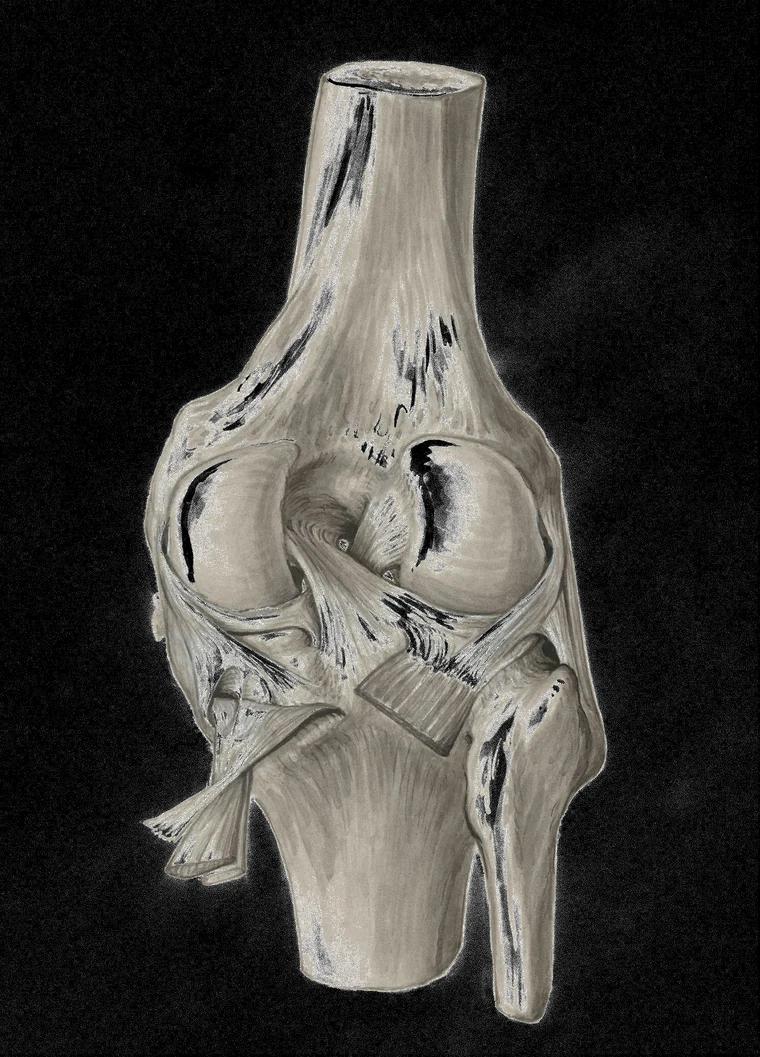
Meniscus anatomy and treatment choices
Meniscal Root Tears and Extrusion
A meniscal root tear affects an attachment that helps the meniscus stay in place and spread load across the knee. The treatment discussion considers that attachment, the cartilage and bone, the alignment of the leg and the activities you want back. Repair, removal of torn tissue and non-surgical care have different aims and recovery plans.
Monson and LaPrade, 2025When to see a doctor firstThe root anchors the meniscus to the shin bone
The knee has an inner meniscus and an outer meniscus between the thigh bone and shin bone. Each has attachments at the front and back, called roots. Those attachments help the meniscus manage load as the knee is used. Monson and LaPrade, 2025
A root tear can detach the attachment from bone or cross the meniscus very close to it. This disrupts the connected fibres that help distribute load. The back attachment of the inner meniscus is called the medial posterior root; much of the treatment research discussed here concerns that injury. Monson and LaPrade, 2025
Root tears can occur after an injury or in a meniscus with gradual tissue changes. Some people remember a pop during a squat, kneeling or a step; others describe a more gradual onset. The history and examination help put the scan finding into context. Monson and LaPrade, 2025
Root tear, posterior horn and extrusion describe different features
The root is the attachment. The posterior horn is the back part of the meniscus. Extrusion describes the meniscus extending outward beyond the edge of the shin bone. A report may describe more than one of these features. Monson and LaPrade, 2025
- Posterior root tear
- The tear involves the back attachment or the meniscus very close to that attachment. The report may also describe whether the tear is partial or complete. Monson and LaPrade, 2025
- Posterior horn tear
- The tear is in the back part of the meniscus. That location wording does not by itself say that the root attachment has torn. Monson and LaPrade, 2025
- Meniscal extrusion
- Part of the meniscus extends outward beyond the edge of the shin bone. Extrusion often accompanies a root tear and is read alongside the tear pattern, cartilage and the rest of the knee. Monson and LaPrade, 2025
The rest of the knee shapes the treatment discussion
For example, an MRI may list a medial posterior root tear, meniscal extrusion and thinning of the cartilage on the inner side of the knee. Those phrases describe the attachment, the position of the meniscus and the joint surface. The consultation brings them together with the onset of symptoms, examination and your activity goals. Monson and LaPrade, 2025
Standing X-rays can add information about joint-space narrowing and leg alignment. MRI describes the meniscus, cartilage and bone in more detail. The amount of arthritis, the quality and position of the meniscus, and the practical demands of recovery all affect whether a repair is suitable. Monson and LaPrade, 2025
A reported root tear deserves a medical discussion about the treatment options, including whether repair is appropriate. Arrange the orthopaedic assessment rather than relying on the general exercise advice for an ordinary stable tear. If the report also describes a bone marrow lesion or insufficiency fracture, that finding may change the protection needed. Monson and LaPrade, 2025
When to see a doctor first
Go to emergency
A hot, red or swollen knee with fever, chills or feeling generally unwell
Go to emergency now.
Get seen today
A knee that is locked and will not straighten fully, especially after a twist
Get medical assessment today through your family doctor, urgent care or emergency. A displaced tear can block the joint and needs an urgent orthopaedic referral.
Sudden severe knee pain or a new inability to put weight on the leg
Keep weight off the leg and get medical assessment today. A fracture, including an insufficiency fracture under the joint surface, needs to be ruled out.
A newly hot, red or swollen knee without fever, chills or feeling unwell
Get same-day medical assessment to rule out infection. Infection is possible without a fever.
Repair, trimming and non-surgical care have different aims
The choice needs to address what is causing difficulty now and what the treatment is intended to achieve for the knee over time. Ask which part of the problem each option addresses and what makes it suitable for your knee. Monson and LaPrade, 2025
- Root repair
- The surgeon aims to restore the attachment and the meniscus’s role in distributing load. Suitability depends on the tear and the rest of the joint, including existing cartilage changes, alignment and the ability to follow the early protection plan. Monson and LaPrade, 2025
- Partial meniscectomy
- Trimming removes part of the torn tissue. It does not reattach the root. The reasons for considering it, and the amount of functioning meniscus that would remain, need their own discussion. Monson and LaPrade, 2025
- Non-surgical management
- Care can address symptoms, walking and strength through an assessed plan, with protection or support where appropriate. Follow-up reviews function and the wider knee problem. The studies of non-surgical care used differing treatment approaches. Monson and LaPrade, 2025
What the treatment studies followed
In a matched cohort of 45 people with medial posterior root tears, 15 received each treatment. At an average follow-up of 74 months, knee replacement had occurred in four people after non-surgical care, nine after partial meniscectomy and none after repair. Arthritis progression also differed. The groups were matched on selected characteristics, but treatment was not randomly assigned, so those counts are not an individual prediction. Bernard et al., 2020
A 2026 prospective study followed 64 people who initially chose non-surgical management for an acute medial posterior root tear; 15 later chose surgery. Symptoms improved alongside structural deterioration. The study excluded chronic tears and arthritis graded Kellgren-Lawrence 3 or higher on X-ray. It shows why symptom relief and joint structure can remain separate questions at follow-up. Nonaka et al., 2026
Rehabilitation follows the chosen treatment and repair
A repaired root needs time to heal at its attachment. Early instructions can limit weight through the leg, knee bending and loaded activities. Crutches, a walking aid or a brace may be part of that plan. Follow the written instructions for the operation; a root repair has different demands from a meniscus trim. Pujol et al., 2025; Monson and LaPrade, 2025
As the plan permits, rehabilitation restores movement, thigh strength and walking. Swelling, knee movement, muscle control and the response to activity help guide progression alongside the time needed for healing. The post-surgical rehabilitation page explains how the operation’s precautions and exercise fit together. Pujol et al., 2025
Comfortable walking, returning to work and returning to a sport are different goals. Later rehabilitation builds the repeated demands of the activity you want back. The return-to-training guide explains that transition.
How the rehabilitation consensus describes recovery
The international meniscus consensus published in 2025 combines healing time with clinical milestones after repair. It suggests six to nine months of rehabilitation for complex, radial, root and horizontal repairs. That recommendation was graded D, reflecting limited evidence and expert agreement. Individual activities still follow the repair-specific plan and the findings at review. Pujol et al., 2025
Review symptoms, activity and the remaining joint questions
Review pain and walking alongside the longer-term plan for the joint. Ask which changes in the cartilage, meniscal position or other knee findings would alter management. Nonaka et al., 2026
Agree what will be reviewed, which changes should prompt earlier contact and whether another investigation would answer a treatment question. You can use the rehabilitation-progress guide to describe the activity attempted, symptoms and response between appointments.
For the other phrases on the scan, the meniscus MRI guide explains tear patterns and signal grades. The whole knee MRI guide connects the meniscus findings with cartilage, bone, ligaments and fluid.
Questions
Why is a root repair being discussed when physiotherapy can help many meniscus tears?
A root repair aims to restore an attachment. Trimming removes torn tissue, while non-surgical care follows its own management plan. The tear pattern and the rest of the knee affect which discussion is appropriate. The 2024 AAOS guideline for acute isolated meniscal injuries explicitly excludes root tears, so its recommendations do not replace a root-specific assessment. AAOS, 2024; Monson and LaPrade, 2025
Will repairing the root prevent arthritis?
Repair aims to restore the attachment and load distribution. In matched patients, arthritis progression and later knee replacement were less common after repair than after the comparison treatments. That is not a guarantee for an individual knee. Existing cartilage changes and alignment remain part of the expected-benefit discussion. Bernard et al., 2020; Monson and LaPrade, 2025
Can I follow the general meniscus exercise program while waiting for review?
Get the activity and protection plan clarified first. A root tear, a healing root repair or an associated insufficiency fracture can need different restrictions from an assessed stable tear. Ask what walking, bending and exercise are currently appropriate, then progress within that plan. Monson and LaPrade, 2025; Pujol et al., 2025
Sources and further reading
- Monson and LaPrade · 2025 · International Journal of Sports Physical Therapy
Posterior Medial Meniscus Root Tears: Clinical Implications, Surgical Management, and Post-operative Rehabilitation Considerations.
A clinical commentary explaining posterior medial root anatomy, extrusion, assessment and repair-specific rehabilitation. It supplies clinical reasoning, rather than a randomized comparison of treatment choices.
- Bernard et al. · 2020 · The American Journal of Sports Medicine
Medial Meniscus Posterior Root Tear Treatment: A Matched Cohort Comparison of Nonoperative Management, Partial Meniscectomy, and Repair.
A matched cohort of 45 patients with medial posterior root tears. Subsequent knee replacement and arthritis progression differed between treatment groups. Treatment was not randomly assigned.
- Nonaka et al. · 2026 · Knee Surgery, Sports Traumatology, Arthroscopy
Clinical improvement despite structural degeneration after nonoperative treatment of medial meniscus posterior root tear: A prospective longitudinal study.
Followed patients with acute medial posterior root tears who initially chose non-surgical management. Symptoms improved alongside structural deterioration; some later chose surgery. Chronic tears and Kellgren-Lawrence grade 3 or higher arthritis were excluded.
- Pujol et al. · 2025 · Knee Surgery, Sports Traumatology, Arthroscopy
The formal EU-US Meniscus Rehabilitation 2024 Consensus: An ESSKA-AOSSM-AASPT initiative. Part I-Rehabilitation management after meniscus surgery (meniscectomy, repair and reconstruction).
A formal consensus distinguishing rehabilitation after partial meniscectomy from repair. Repair progression combines healing time and clinical milestones; most recommendations draw on limited evidence and expert agreement.
- AAOS · 2024 · Clinical practice guideline scope
Acute Isolated Meniscal Pathology
The guideline explicitly excludes meniscal root tears. Its recommendations for acute isolated tears should therefore be kept separate from a root-specific treatment discussion.