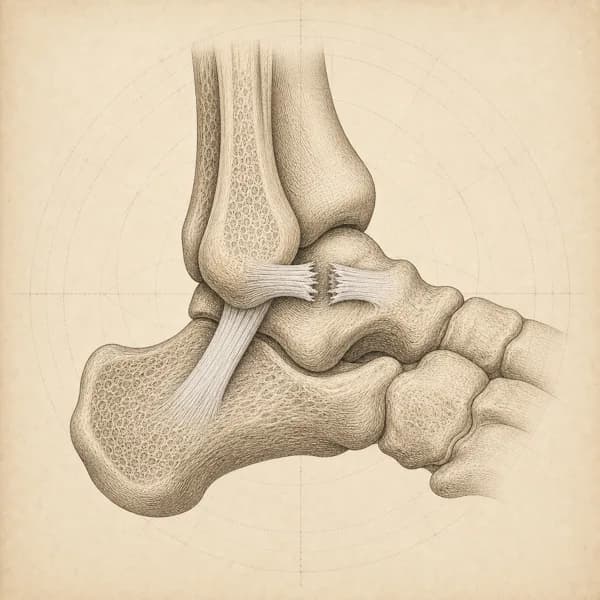
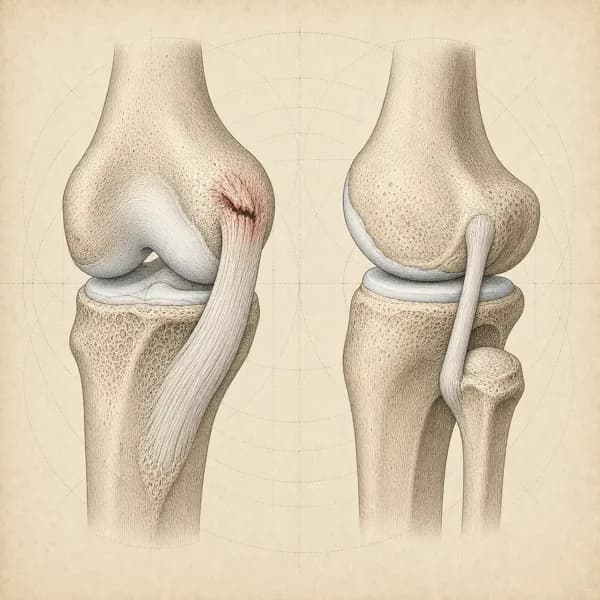
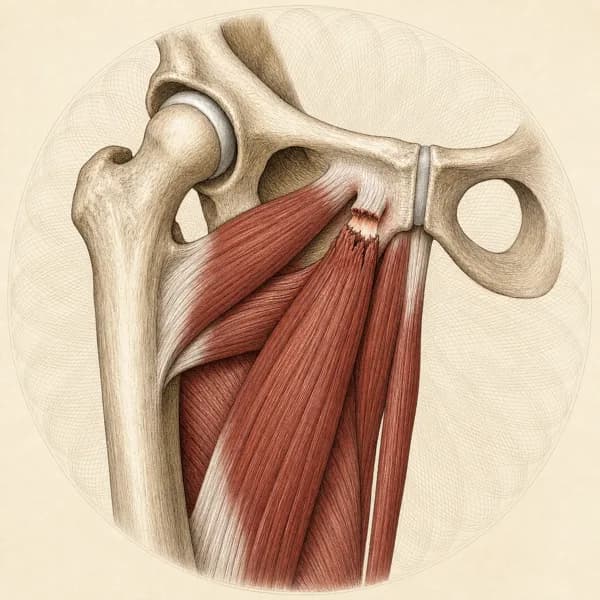
What a grade 1, 2 or 3 sprain or strain means

A grade is a short way of saying how much of a ligament or muscle is injured. It appears in clinic notes and on scan reports, and it is often read as a recovery date. It is not one. This guide covers what the grade describes, how it is decided, and what studies report about recovery for a few common injuries.

Assessing and treating knee pain in Burlington, Ontario.

When to see a doctor firstBroader Knee Pain Guide
The ligaments on each side of the knee

What the grade describes

A sprain is an injury to a ligament. A strain is an injury to a muscle or its tendon. A common three-grade system describes mild damage as grade 1, a partial tear as grade 2 and a complete tear as grade 3.

GradeIn the common three-grade system
Grade 1Mild fibre damage. The area may be sore or swollen, with little or no extra looseness in the joint. Pain can still limit movement or strength.
Grade 2A partial tear. A ligament injury may allow more movement in the joint, and a muscle or tendon injury may reduce strength. Bruising and swelling can occur.
Grade 3A complete tear. A ligament injury can leave the joint markedly loose. A muscle or tendon injury can reduce function a great deal, sometimes with a visible gap or a change in the shape of the muscle.
Grade 1
Mild fibre damage. The area may be sore or swollen, with little or no extra looseness in the joint. Pain can still limit movement or strength.
Grade 2
A partial tear. A ligament injury may allow more movement in the joint, and a muscle or tendon injury may reduce strength. Bruising and swelling can occur.
Grade 3
A complete tear. A ligament injury can leave the joint markedly loose. A muscle or tendon injury can reduce function a great deal, sometimes with a visible gap or a change in the shape of the muscle.

Not every report uses this system. Some grading systems use different definitions. The British Athletics classification for muscle injuries, for example, runs from 0 to 4 and adds a letter for where in the muscle the injury sits. A grade means little until you know which system it comes from and which structure it describes.

When to see a doctor first

Go to emergency

  • A joint that looked dislocated, or a foot that turns cold, pale or blue after a knee injury

    Go to emergency now, even if the joint has moved back into place.

  • Calf pain, swelling or warmth in the days after an injury

    Seek same-day medical assessment to rule out a blood clot. Call 911 for sudden shortness of breath or chest pain.

Get seen today

  • Unable to take four steps on the leg after a knee or ankle injury, or marked tenderness directly over a bone

    Go to urgent care or emergency to check for a fracture before starting rehab.

  • New difficulty lifting the foot, or numbness that does not settle, after a knee injury

    Seek same-day medical assessment. A nerve may be involved.

Check with your doctor

  • A joint that gives way or feels markedly loose

    Arrange prompt medical assessment. This can change the treatment and whether imaging is needed.

  • A visible gap or a change in the shape of a muscle after an injury, or a sudden major loss of strength

    Arrange prompt medical assessment for a possible complete tear.

How the grade is decided

A grade can come from the exam or from a scan, and the two describe different things. A clinical grade for a ligament reflects how much the joint opens under gentle stress compared with the other side. An imaging grade describes how the tissue looks.

They do not always match. In a study of 362 people with a recent knee injury, the grade given to the MCL on examination and the grade given on MRI agreed only moderately.

In clinic I look at how the injury happened, where it is tender, how the joint moves, how strong the muscle is and how stable the joint feels. Pain and swelling can limit some tests in the first days, so I may repeat them at a later visit. The plan also depends on what else is injured and on how the area responds as rehab goes on.

Recovery time depends on the injury and the activity

Walking comfortably, returning to training and returning to competition are different stages of recovery. The grade helps describe the injury, but it does not give a return date. The figures below come from studies of particular groups of athletes, and each says what was measured.

  • Groin (adductor) strain. In a study of 81 male athletes on a supervised rehab program, those with an MRI grade 0 to 2 injury returned to full team training after a median of 18 days, with no clear difference between those grades. Those with a grade 3 injury took a median of 78 days. Individual times varied widely. More on the groin strain page.
  • MCL sprain. Grade 1 and 2 sprains, and many grade 3 sprains without other injuries, are managed without surgery. Lower-grade sprains often settle over weeks, and a higher-grade sprain can take months. I have not found a study that gives a dependable figure for each grade, so I set expectations after the exam. See MCL vs. LCL.
  • LCL sprain. Recovery depends on how stable the knee is and on whether the injury is limited to the LCL. Marked looseness, or injury to other structures at the outer and back corner of the knee, changes both the treatment and the timeline, and needs a medical assessment.
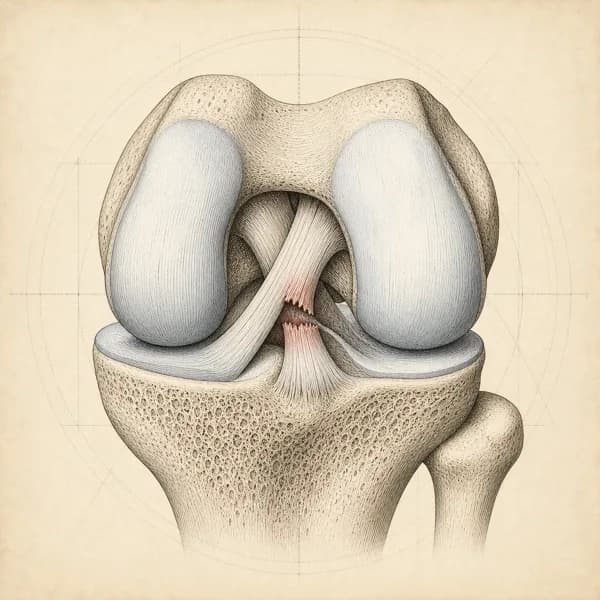
  • PCL sprain. Return to sport can take several months. In a study of 46 athletes with a grade 2 or 3 injury of the PCL alone, treated with a brace and rehab and without surgery, return to sport-specific training took a mean of about 11 weeks and return to full competition about 16 weeks. More on the PCL injury page.
  • Outer ankle sprain. There are no agreed time-based rules for going back to sport after an ankle sprain. An international expert group recommends basing the decision on pain, ankle movement and strength, confidence in the ankle, balance, and whether you can get through a full training session. More on the ankle sprain page.

What changes the timeline

  • What else is injured. A cruciate ligament, meniscus or other injury alongside the sprain can change the protection needed, the rehab program and the timing of return.
  • Where in the tissue it is. The location of a tear can matter as much as its grade. In the groin study, an injury where the tendon meets the bone was the scan finding most strongly linked to a longer return.
  • What you are returning to. Walking and desk work usually come back before sprinting, cutting and contact.
  • Your history. Previous injuries, lasting weakness or ongoing looseness in the joint can affect the plan.

What recovery usually involves

Early on, the area is protected from the movement that injured it while the rest of the limb keeps moving. Strengthening exercises are then added and progressed as the tissue tolerates load. The last stage is the specific work for your sport or job: sprinting, cutting, jumping or lifting.

Return to sport depends on symptoms, stability, strength and sport-specific testing, alongside the time and protection the injury needs to heal.

Questions about grades

Is a grade 2 sprain a tear?

In the common three-grade system, a grade 2 sprain describes a partial tear of the ligament. "Sprain" is the broader word. It also covers milder injuries and complete tears.

My report says grade 1 but it still hurts a lot. Is that normal?

The grade describes the pattern of injury, not how much it hurts, and even a mild injury can be painful. Severe or increasing pain, or symptoms that do not follow the recovery you were told to expect, should be reassessed.

Can a grade 3 injury be treated without surgery?

Yes, depending on the structure and on what else is injured. Many complete tears of the MCL alone are managed without surgery, and some complete tears of the PCL alone are too. A complete injury to the outer and back corner of the knee is most often treated surgically. A complete tear needs a medical assessment, but the grade alone does not decide the treatment.

How do I know when I am ready to go back?

Readiness is judged from movement, strength, balance and progressively harder activity. The limb should cope with the demands of training or work without giving way, and without a marked rise in symptoms during or afterwards. Confidence in the limb and the time the injury needs to heal are considered as well.

Do I need a scan to get a grade?

Not always. Many sprains and strains are graded and managed from the exam alone. I cannot order imaging. When imaging would change the plan, I flag it to your family doctor or a sports medicine doctor and refer you.

Evidence this page is built on

The main sources behind this guide. Other studies are named in the text where they are used.

2014 Pollock N, James SL, Lee JC, Chakraverty R. British Journal of Sports Medicine

British athletics muscle injury classification: a new grading system

States that the commonly used three-grade muscle injury systems lack diagnostic accuracy and give limited information about prognosis, and proposes a system graded 0 to 4 on MRI with a letter for where in the muscle the injury sits.
2024 Brown JS, Olsson O, Isacsson A, Englund M. Research in Sports Medicine

Clinical versus MRI grading of the medial collateral ligament in acute knee injury

In 362 patients with an acute knee injury, agreement between the clinical grade and the MRI grade of the MCL was moderate (weighted kappa 0.56).

2020 Serner A, Weir A, Tol JL, et al. Orthopaedic Journal of Sports Medicine

Return to Sport After Criteria-Based Rehabilitation of Acute Adductor Injuries in Male Athletes

In 81 male athletes on a supervised criteria-based program, return to full team training took a median of 18 days (interquartile range 14 to 27) for MRI grade 0 to 2 injuries, with no statistical difference between those grades, and 78 days (68 to 98) for grade 3 injuries.

2020 Serner A, Weir A, Tol JL, et al. American Journal of Sports Medicine

Associations Between Initial Clinical Examination and Imaging Findings and Return-to-Sport in Male Athletes With Acute Adductor Injuries

In the same group of athletes, the strongest predictors of a longer return were tenderness at the attachment of the adductor longus or a defect that could be felt, and the strongest MRI predictor was injury where the tendon meets the bone.

Show all 8 sources

2006 Giannotti BF, Rudy T, Graziano J. Sports Medicine and Arthroscopy Review

The non-surgical management of isolated medial collateral ligament injuries of the knee

Reports that isolated grade I and II tears of the MCL and most grade III tears can be treated without surgery with a supervised, functional rehabilitation program.

2016 Chahla J, Moatshe G, Dean CS, LaPrade RF. Archives of Bone and Joint Surgery

Posterolateral Corner of the Knee: Current Concepts

Reports that complete injuries to the outer and back corner of the knee rarely heal with non-operative treatment and are most often treated surgically.

2017 Agolley D, Gabr A, Benjamin-Laing H, Haddad FS. The Bone & Joint Journal

Successful return to sports in athletes following non-operative management of acute isolated posterior cruciate ligament injuries

In 46 athletes with an isolated grade II or III PCL injury treated with bracing and rehabilitation, the mean time to sport-specific training was 10.6 weeks and to full competitive sport 16.4 weeks (range 10 to 40).

2021 Smith MD, Vicenzino B, Bahr R, et al. British Journal of Sports Medicine

Return to sport decisions after an acute lateral ankle sprain injury: introducing the PAASS framework

An international expert consensus noting that no guidelines existed for return to sport after an ankle sprain, and agreeing on assessment items in five areas: pain, ankle impairments, athlete perception, sensorimotor control, and sport and functional performance.

Access, hours, and how to book

I see patients for knee pain at Endorphins Health & Wellness Centre in Burlington. The clinic serves people coming in from Burlington, Waterdown, Oakville, Hamilton, Flamborough, and Carlisle, with free parking on site and a ground-floor entrance.

  • 4631 Palladium Way, Unit 6Burlington, ON L7M 0W9
  • (905) 634-6000Direct insurance billing available. No physician referral needed.

Burlington hours

Endorphins Health & Wellness Centre
4631 Palladium Way
Monday
1:30 to 7:00 PM
Tuesday
3:30 to 8:00 PM
Thursday
1:30 to 8:00 PM
Headon Physio
1387 Walkers Line
Wednesday
2:00 to 7:00 PM
Friday
1:00 to 7:00 PM
PhysioMax Wellness
1035 Brant Street
Tuesday
11:00 AM to 2:30 PM
Saturday
12:00 to 3:00 PM